

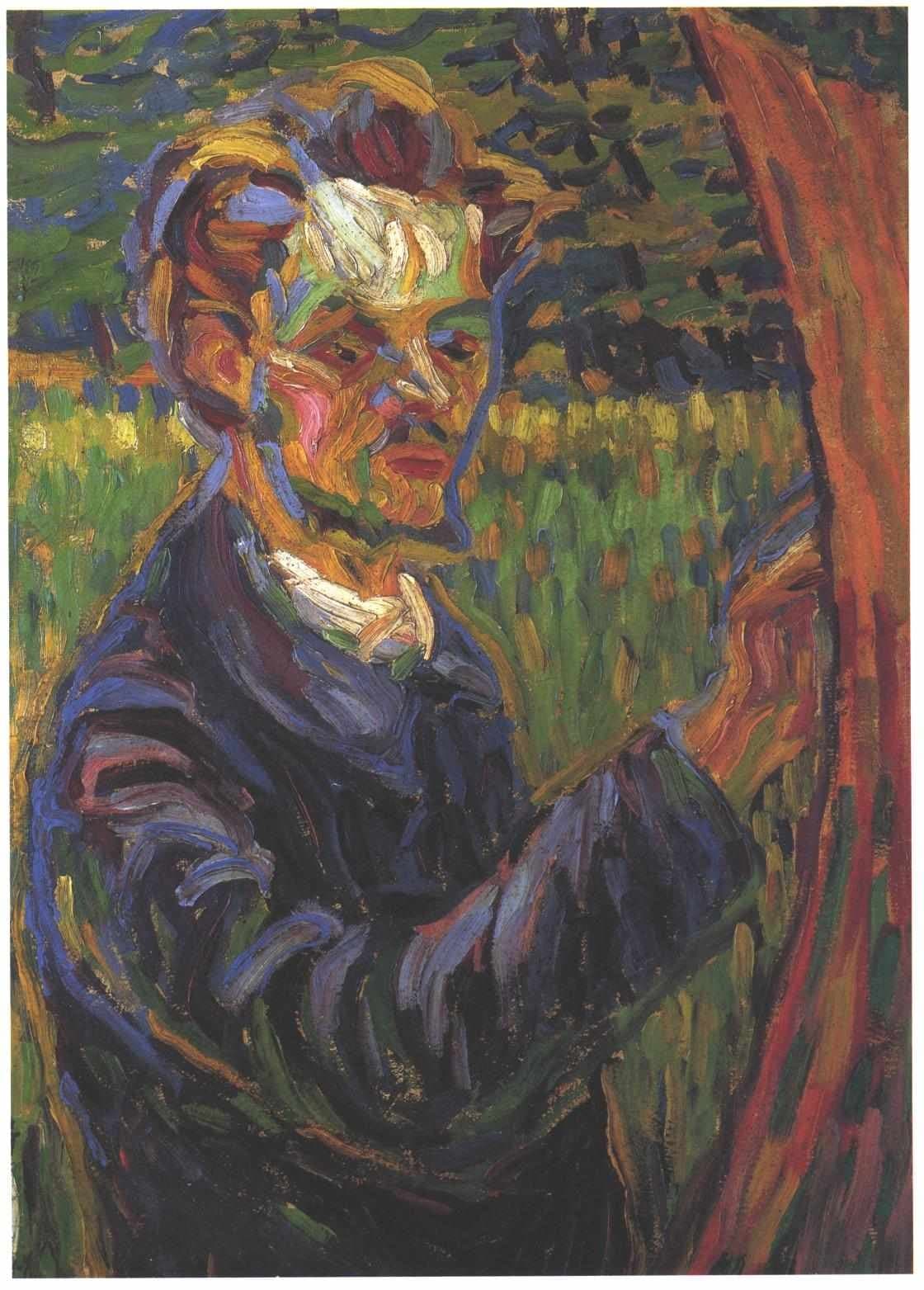
Erich Heckel valuation
Die Brucke founder, and one of the great woodcutters of German Expressionism.
Erich Heckel was born in Saxony in 1883 and was one of the four architecture students who founded Die Brucke in Dresden in 1905 with Kirchner, Schmidt-Rottluff and Bleyl.
What a work by Erich Heckel is worth
Send photographs and whatever paperwork came with it. The first question is what the work actually is — edition or unique, when, and in what condition — because everything else follows from the answer. A valuation is free, made online from the photographs you send, and it commits you to nothing. We act for sellers across the United Kingdom, Europe and the United States.
Write to info@whitebankfineart.co.uk, or start below.
Bio
Erich Heckel was born in Saxony in 1883 and was one of the four architecture students who founded Die Brucke in Dresden in 1905 with Kirchner, Schmidt-Rottluff and Bleyl. He found the group its first premises, kept its accounts, and made some of the sharpest woodcuts of the movement — angular, splintered, cut with the grain left showing. He served as a medical orderly in Flanders during the First World War, where he met Beckmann and Ensor. The Nazis declared his work degenerate, confiscated more than seven hundred pieces and banned him from exhibiting; his Berlin studio and many of his blocks were destroyed in 1944. He died in 1970.
The woodcuts and lithographs of the Brucke years are the heart of the market and are catalogued by Dube; state, paper, hand-colouring and whether an impression is from the small original printing rather than a later edition are decisive. Heckel reprinted from surviving blocks after the war and those impressions are valued quite differently. Paintings from before 1920 are scarce because so many were confiscated or destroyed, and provenance between 1933 and 1945 must be examined as a matter of course.
At a glance
- Born
- 31 July 1883, Döbeln
- Died
- 27 January 1970, Radolfzell am Bodensee
- Movement
- Expressionism
More on Wikipedia.
Flanders, the Heckelraum and Lake Constance
Heckel moved from Dresden to Berlin in 1911, two years before Die Brücke dissolved, and in 1915 joined a Red Cross hospital train in Flanders as a medical orderly. Between 1922 and 1924 he painted the walls of a small room in the Angermuseum at Erfurt, now called the Heckelraum, which is regarded as the most important surviving mural scheme of German Expressionism.
After the Second World War he lived at Gaienhofen on Lake Constance and taught at the Karlsruhe Academy until 1955, and he died at Radolfzell in 1970. Dube's catalogues record 465 woodcuts, 375 etchings and 400 lithographs, more than 200 of them from the last seven years of his life, so the date of a print matters as much as its image.
Döbeln, Wilhelm Kreis and the Seifert lamp factory
Heckel was born in Döbeln, the son of a railway engineer, and went to the Realgymnasium in Chemnitz from 1897 to 1904. He spent only three terms studying architecture in Dresden, and then worked as a draughtsman in the office of the architect Wilhelm Kreis until July 1907. When the firm designed an exhibition room for the lamp manufacturer Max Seifert, he persuaded Seifert to give wall space to Die Brücke, and the group showed at the factory in Löbtau. The Dresden police barred his poster for the show from public display, and a later exhibition of prints at Löbtau included woodcuts by Kandinsky.
As the group's business manager he made contacts with artists such as Franz Marc, which brought Die Brücke a mention in the Blaue Reiter almanac. The army turned him down in 1914 as too old. The hospital train he joined in 1915 was assembled by Walter Kaesbach, a curator at the National Gallery in Berlin, and from May 1915 to the end of the war he served at the emergency hospital in Ostend station. His work was part of the art competitions at the 1928 and 1932 Olympic Games. His painting Roquairol was the model for the covers of David Bowie's "Heroes" and Iggy Pop's The Idiot in 1977, and the Neue Galerie in New York showed his work of 1905 to 1920 in 2025.
Whitebank Fine Art is an art advisory and gallery, not an auction house, and is not affiliated with any auction house or with the artist, their estate or their representatives. This page describes the range we advise on. Nothing here is investment advice.
