

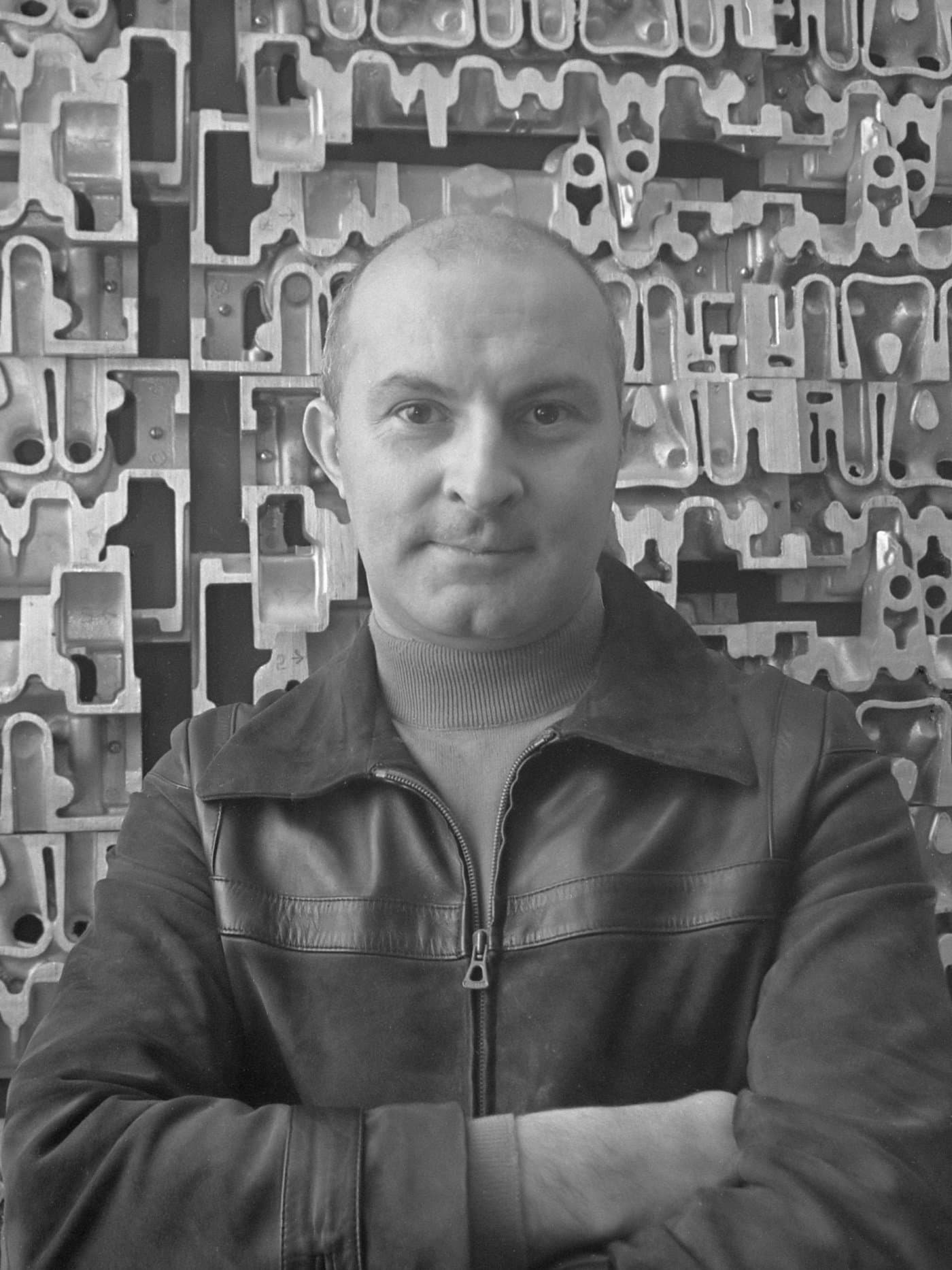
Arman valuation
Nouveau Realiste who sliced, burned, smashed and embedded the objects everyone else was buying.
Arman was born Armand Fernandez in Nice in 1928 and lost the final d of his first name to a printer's error on a 1958 catalogue, which he kept.
What a work by Arman is worth
Send photographs and whatever paperwork came with it. The first question is what the work actually is — edition or unique, when, and in what condition — because everything else follows from the answer. A valuation is free, made online from the photographs you send, and it commits you to nothing. We act for sellers across the United Kingdom, Europe and the United States.
Write to info@whitebankfineart.co.uk, or start below.
Bio
Arman was born Armand Fernandez in Nice in 1928 and lost the final d of his first name to a printer's error on a 1958 catalogue, which he kept. In 1960 he was among the founding signatories of Nouveau Realisme with Yves Klein, Jean Tinguely and the critic Pierre Restany, and the work he is known for is a set of operations performed on mass-produced objects rather than a style. Accumulations pack identical things — spanners, gas masks, watch parts — into resin or a vitrine. Coleres smash or slice an object, usually a musical instrument, and fix the pieces in the order they fell. Poubelles glaze over the contents of a bin. He worked between Nice and New York until his death in 2005.
The single most important question with an Arman is whether the work is unique or an edition, because he produced a great deal of both and they are not always obviously different in a photograph. Sliced and embedded bronzes were cast in numbered editions, sometimes substantial ones; the early accumulations and coleres are one-offs. Numbering, foundry marks and the certificate all matter, and the Arman Studio Archives in New York is where attribution questions are settled.
Cachets, Le Plein and the Chelsea Hotel
Arman studied at the École du Louvre and taught judo in Madrid before he turned fully to art. An exhibition of Kurt Schwitters in 1954 led him to the Cachets, accumulations of rubber-stamp marks shown at Iris Clert in 1958. In 1960 he filled the same gallery with rubbish for Le Plein, the counterpart to Yves Klein's Le Vide there two years before.
From 1961, after his first New York exhibition at the Cordier Warren Gallery, he lived partly in New York, first at the Chelsea Hotel, and met Marcel Duchamp at a dinner given by William Copley. Long Term Parking, a tower of cars set in concrete, stands at Jouy-en-Josas outside Paris.
Nice, Warhol and Hope for Peace
Arman's father, Antonio Fernandez, was an antiques dealer in Nice and an amateur painter, photographer and cellist, and he taught his son oil painting and photography. At judo classes in a Nice police school Arman met Yves Klein and Claude Pascal, and the three hitch-hiked around Europe together. In 1952 he served as a medical orderly with the French army in the Indochina War. His first welded accumulations, of watches, axes and other metal objects, date from 1962, and the bronze musical instruments came out of a long collaboration with a foundry in Normandy.
In 1964 Andy Warhol filmed him at Daniel Spoerri's dinner performance, Dinner at Daley's, reading a newspaper in profile for four minutes. Warhol owned two of his Poubelles and an accumulation called Amphetamines, which were sold with Warhol's collection in 1988. Arman became an American citizen in 1973. His largest commission, Hope for Peace of 1995, stands in Beirut: a 32-metre tower of 83 tanks and military vehicles made for the fiftieth anniversary of the Lebanese army. The Centre Pompidou held a retrospective in 2010.
Whitebank Fine Art is an art advisory and gallery, not an auction house, and is not affiliated with any auction house or with the artist, their estate or their representatives. This page describes the range we advise on. Nothing here is investment advice.
