

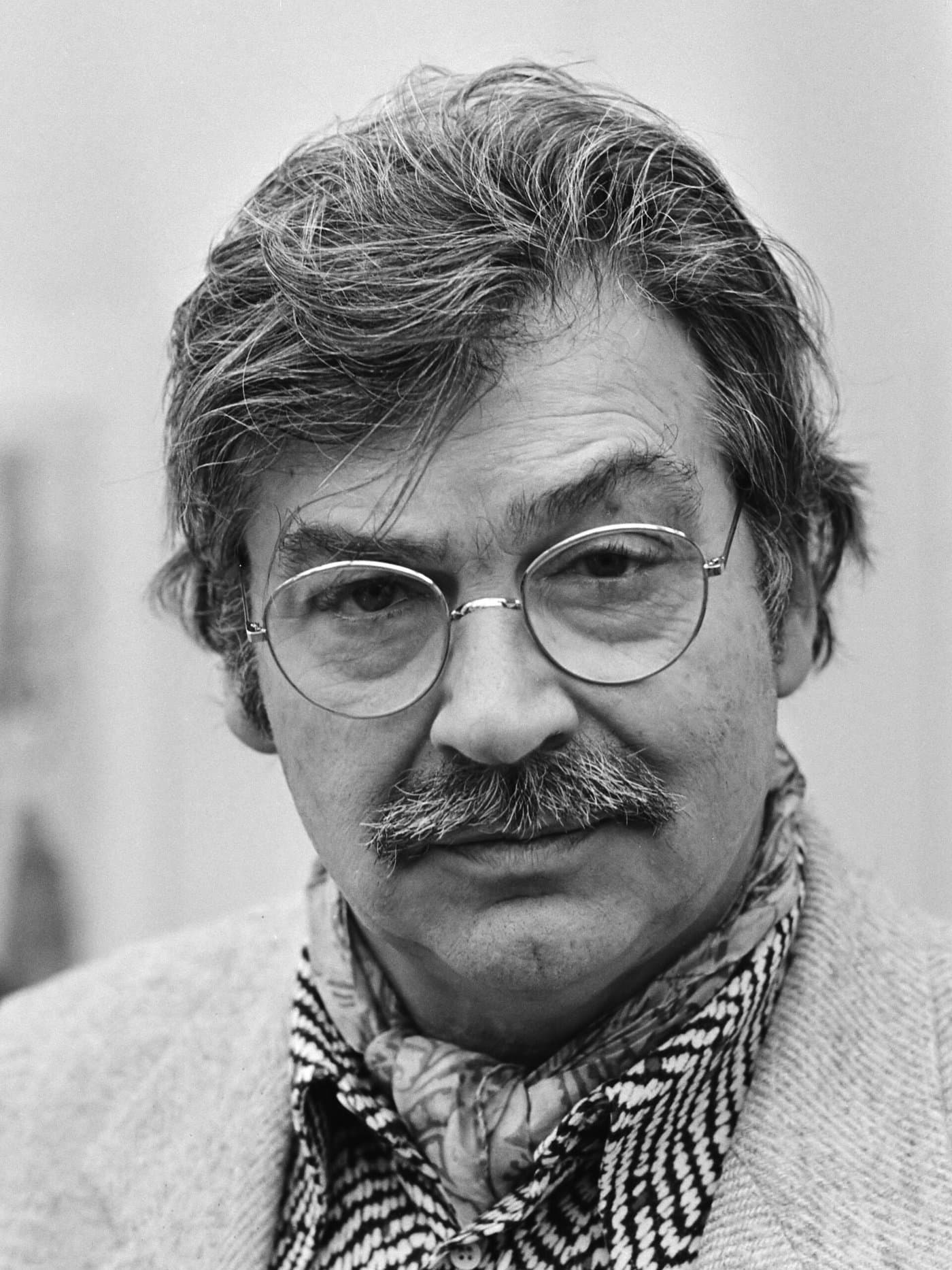
Karel Appel valuation
CoBrA founder, and the painter who wanted the picture to look as though a child had refused to be careful.
Karel Appel was born in Amsterdam in 1921 and was one of the six founders of CoBrA in a Paris cafe in 1948, alongside Constant, Corneille, Asger Jorn and Christian Dotremont.
What a work by Karel Appel is worth
Send photographs and whatever paperwork came with it. The first question is what the work actually is — edition or unique, when, and in what condition — because everything else follows from the answer. A valuation is free, made online from the photographs you send, and it commits you to nothing. We act for sellers across the United Kingdom, Europe and the United States.
Write to info@whitebankfineart.co.uk, or start below.
Bio
Karel Appel was born in Amsterdam in 1921 and was one of the six founders of CoBrA in a Paris cafe in 1948, alongside Constant, Corneille, Asger Jorn and Christian Dotremont. The group lasted three years; the manner lasted him a lifetime. Appel painted animals, children and half-formed creatures in raw colour and paint thick enough to stand off the surface, and defended the roughness as the point rather than the price of speed. He settled in Paris, later worked in New York and Monaco, and moved outwards from painting into painted wood reliefs, sculpture and ceramics before his death in 2006.
The range under his name is unusually wide, and a valuation turns first on where in a sixty-year career a work sits: the CoBrA and early 1950s paintings are a different market from the later output, and the two are not always distinguishable to an untrained eye. Gouaches on paper, prints, painted wood reliefs and polychrome sculpture all appear regularly. Signature and date carry weight, as does whether the work has been seen by the Karel Appel Foundation, which holds the archive and is the reference point for questions of attribution.
At a glance
- Born
- 25 April 1921, Amsterdam
- Died
- 3 May 2006, Zurich
- Movements
- CoBrA, Abstract Expressionism
More on Wikipedia.
The Stedelijk, Martha Jackson and the Foundation
Appel studied at the Rijksakademie in Amsterdam from 1940 to 1943, where he met Corneille and later Constant, and had his first show in Groningen in 1946. The CoBrA exhibition at the Stedelijk Museum in 1949 caused a scandal in the Dutch press, and he moved to Paris in 1950. His first American exhibition was at the Martha Jackson Gallery in New York in 1954, and in America he painted jazz musicians, among them Miles Davis and Dizzy Gillespie.
He died in Zürich in May 2006 and is buried at Père Lachaise in Paris. The Karel Appel Foundation in Amsterdam, which he set up in his lifetime, oversees the catalogue of his paintings, works on paper and sculpture, and the Kunstmuseum Den Haag gave him a retrospective in 2016.
Dapperstraat, Questioning Children and The New Decade
Appel was born at Dapperstraat 7 in Amsterdam, where his father had a barbershop on the ground floor; his mother descended from French Huguenots. He painted his first canvas, a still life of a fruit basket, at fourteen, and for his fifteenth birthday his uncle Karel Chevalier, an amateur painter, gave him a paint set, an easel and some lessons. His parents opposed his choice, and during the occupation he left home, partly to avoid being sent to work in the German arms industry. From 1947 he made assemblages from used materials painted white, red, yellow, blue and black, and he joined the Experimentele Groep with Anton Rooskens, Theo Wolvecamp and Jan Nieuwenhuys.
His fresco Questioning Children, painted in Amsterdam City Hall in 1949, caused such controversy that it was covered up for ten years, and the hostile Dutch reaction to CoBrA was one reason he moved to Paris. He travelled to Mexico, the United States, Yugoslavia and Brazil and lived for spells in New York and Florence. In 1955 his Child and Beast II was in The New Decade at the Museum of Modern Art, among the work of twenty-two European painters and sculptors. After 1990 Rudi Fuchs organised large shows of his work in Amsterdam and Brussels. Works that went missing on the way to his foundation in 2002 were found in a disused warehouse in Britain in 2012.
Whitebank Fine Art is an art advisory and gallery, not an auction house, and is not affiliated with any auction house or with the artist, their estate or their representatives. This page describes the range we advise on. Nothing here is investment advice.
