

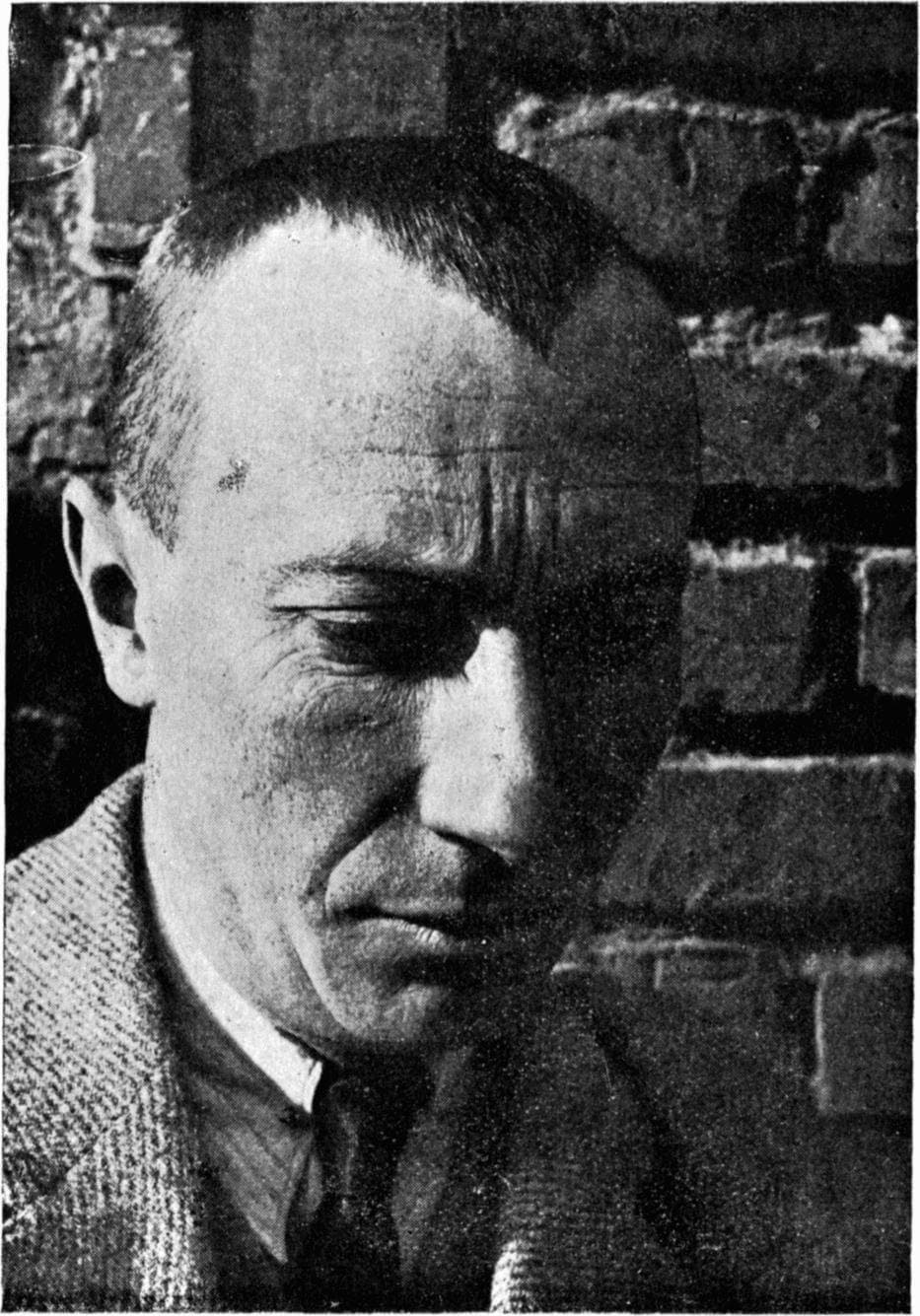
Jean Arp valuation
Dada in Zurich, Surrealism in Paris, and then fifty years of forms that look grown rather than carved.
Jean Arp — Hans Arp in German, and he used both — was born in Strasbourg in 1886, on ground that changed nationality twice in his lifetime.
What a work by Jean Arp is worth
Send photographs and whatever paperwork came with it. The first question is what the work actually is — edition or unique, when, and in what condition — because everything else follows from the answer. A valuation is free, made online from the photographs you send, and it commits you to nothing. We act for sellers across the United Kingdom, Europe and the United States.
Write to info@whitebankfineart.co.uk, or start below.
Bio
Jean Arp — Hans Arp in German, and he used both — was born in Strasbourg in 1886, on ground that changed nationality twice in his lifetime. He was at the Cabaret Voltaire for the founding of Dada in 1916, made the torn-paper collages he described as arranged according to the laws of chance, exhibited with the Surrealists in the 1920s, and joined Abstraction-Creation in the 1930s. From about 1930 he worked mainly in three dimensions, and the biomorphic sculpture of the following decades — plaster first, then marble and bronze — is what most people picture. He died at Basel in 1966.
Bronzes are the bulk of what comes to market, and with them the questions are technical rather than aesthetic: which edition, cast in the artist's lifetime or after it, from which foundry, and with what patina. Posthumous casting continued under the estate, and a lifetime cast and a later one are not the same object commercially even where they are identical in form. The painted wood reliefs are unique and scarce. Papiers dechires, drawings and prints appear more often. The Fondation Arp holds the archive and the catalogue work.
At a glance
- Born
- 16 September 1886, Strasbourg
- Died
- 7 June 1966, Basel
- Movements
- Dada, De Stijl, Surrealism
More on Wikipedia.
Meudon, Clamart and Sophie Taeuber-Arp
Arp married the Swiss artist Sophie Taeuber in 1922, and they worked together closely; she designed the house they built at Clamart in the 1930s. They fled the German occupation to Zurich, where she died in 1943. Arp won the Grand Prize for sculpture at the Venice Biennale in 1954 and made a mural for the UNESCO building in Paris.
The works they made together are a category of their own. For a bronze, the foundry, the cast number and the date of casting, checked against the catalogue, are what separate a lifetime cast from a later one.
Weimar, Kandinsky and the three foundations
Arp's poetry was first published in Paris in 1904. He studied at the Weimar art school from 1905 to 1907 and at the Académie Julian in 1908, and in 1911 he was a founder member of the Moderne Bund in Lucerne. In 1912 he called on Kandinsky in Munich, who encouraged him and showed him with the Blaue Reiter, and in Berlin in 1913 the dealer Herwarth Walden took him up. When Alsace returned to France after the First World War, French law required a French name, and Hans legally became Jean.
From 1926 he lived at Meudon, and in the 1930s he made small works in several parts that a viewer could pick up and rearrange. A solo show at the Buchholz Gallery in New York in 1949 brought international recognition, followed by a relief for the Harvard Graduate Center in 1950 and a retrospective at the Museum of Modern Art in 1958. In 1959 he married the collector Marguerite Hagenbach. Three foundations look after the work: the Fondation Arp at Clamart, the Fondazione Marguerite Arp-Hagenbach in Locarno, and the Stiftung Hans Arp und Sophie Taeuber-Arp, set up in 1977, which holds the largest collection and the copyright.
Whitebank Fine Art is an art advisory and gallery, not an auction house, and is not affiliated with any auction house or with the artist, their estate or their representatives. This page describes the range we advise on. Nothing here is investment advice.
