
Chaim Soutine valuation
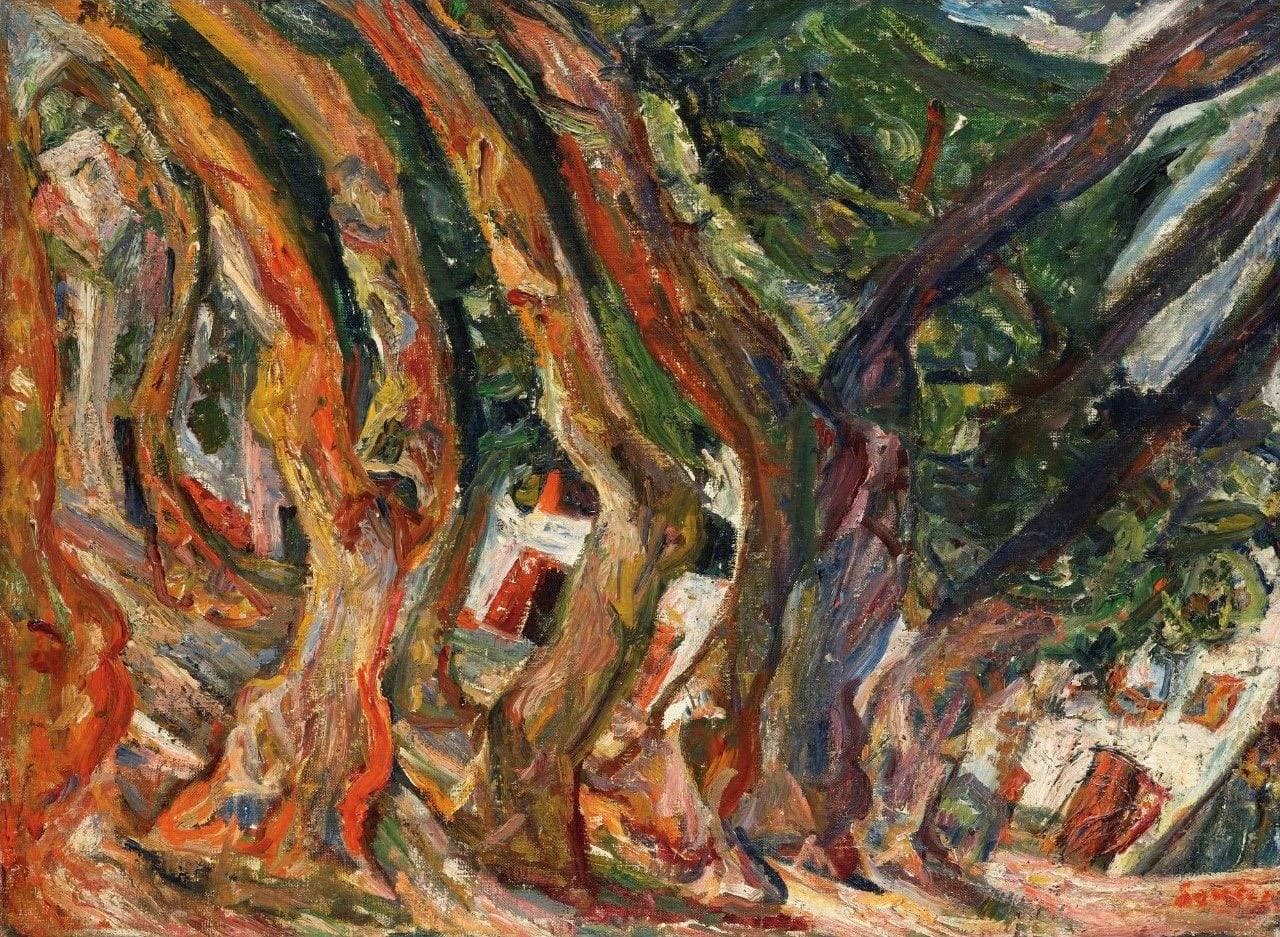
Painted carcasses, bellboys and landscapes that appear to be sliding off the canvas.
Chaim Soutine was born near Minsk in 1893, the tenth of eleven children in a poor Jewish family, and reached Paris in 1913, where he lived in the artists' colony at La Ruche alongside Modigliani, who became his closest friend and champion.
What a work by Chaim Soutine is worth
Send photographs and whatever paperwork came with it. The first question is what the work actually is — edition or unique, when, and in what condition — because everything else follows from the answer. A valuation is free, made online from the photographs you send, and it commits you to nothing. We act for sellers across the United Kingdom, Europe and the United States.
Write to info@whitebankfineart.co.uk, or start below.
Bio
Chaim Soutine was born near Minsk in 1893, the tenth of eleven children in a poor Jewish family, and reached Paris in 1913, where he lived in the artists' colony at La Ruche alongside Modigliani, who became his closest friend and champion. The paintings are violently handled and thickly loaded: the landscapes at Ceret that lean and buckle, the portraits of pastry cooks and bellboys and choirboys, and the hanging carcasses of beef painted from an actual carcass he kept in the studio and refreshed with blood, to his neighbours' fury. A single American collector bought dozens of his works in 1923 and made his reputation overnight. He died in occupied France in 1943.
The paint is exceptionally thick and was often applied over insufficiently dry layers, so cracking, cupping and past consolidation are common and condition history matters more than usual. He also destroyed and reworked a great deal of his own work. Provenance for the 1933 to 1945 period requires proper examination, given his own circumstances and those of many early collectors. The catalogue raisonne is the reference. Few drawings survive, which is itself a useful fact when one is offered.
At a glance
- Born
- 13 January 1893, Śmiłavičy
- Died
- 9 August 1943, 16th arrondissement of Paris
- Movement
- Expressionism
More on Wikipedia.
Barnes, the catalogue and the exhibitions
After the war the dealer Paul Guillaume took up Soutine's work, and in 1923, at a showing Guillaume arranged, the American collector Albert C. Barnes bought around sixty paintings at once, which changed his circumstances overnight. He spent the occupation in hiding, left it for emergency surgery in Paris, and died there in August 1943.
The catalogue raisonné by Maurice Tuchman, Esti Dunow and Klaus Perls, published in 1993, is the reference for the paintings. The Courtauld Gallery showed his portraits of cooks, waiters and bellboys in 2017 and 2018, and the Jewish Museum in New York has given him two major exhibitions.
Whitebank Fine Art is an art advisory and gallery, not an auction house, and is not affiliated with any auction house or with the artist, their estate or their representatives. This page describes the range we advise on. Nothing here is investment advice.