
Frank Stella valuation
Said what you see is what you see, then spent fifty years making it more complicated.
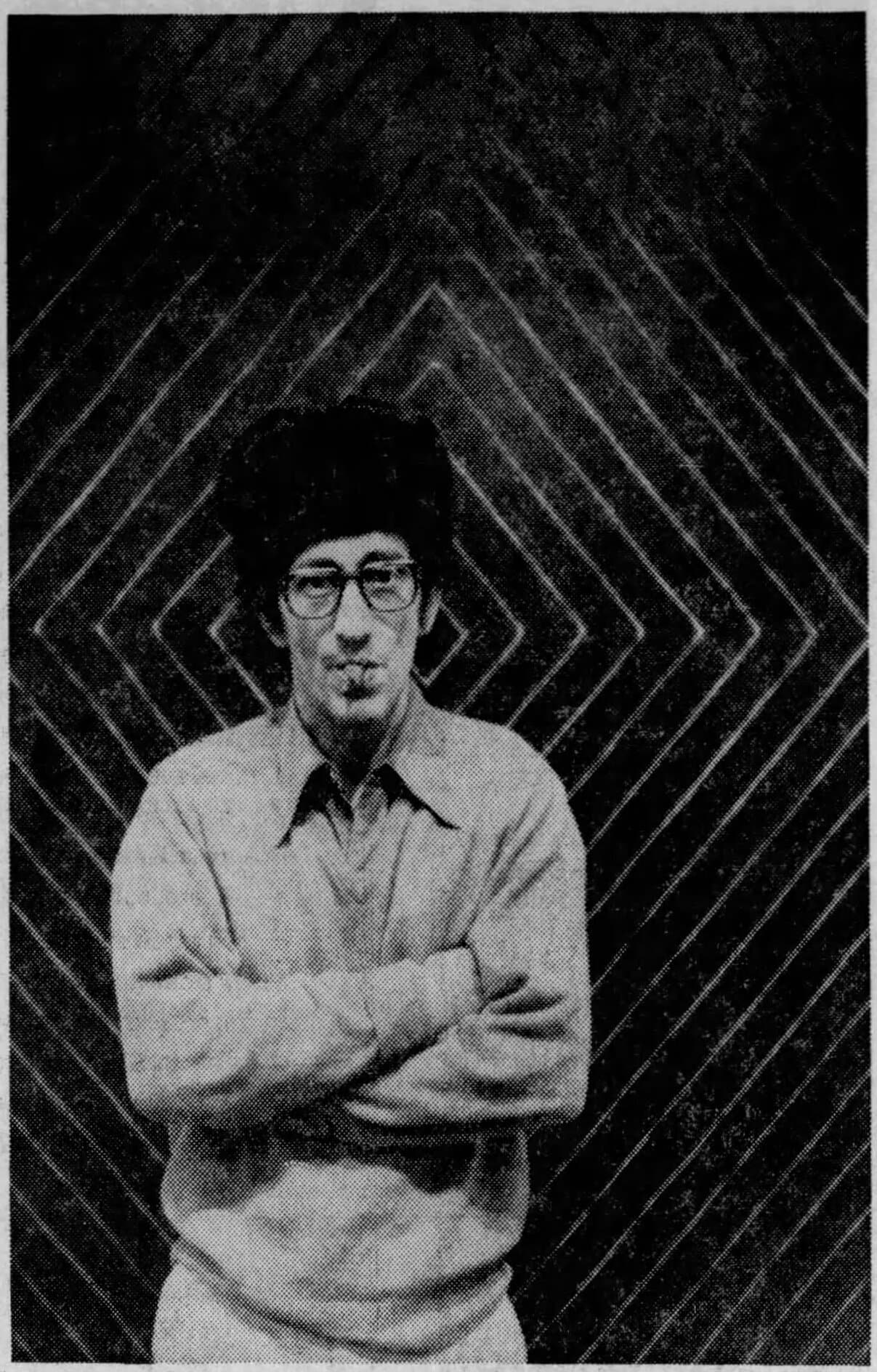
Frank Stella was born in Massachusetts in 1936 and at twenty-three showed the Black Paintings — symmetrical bands of black enamel separated by thin lines of bare canvas, which he explained by saying that what you see is what you see.
What a work by Frank Stella is worth
Send photographs and whatever paperwork came with it. The first question is what the work actually is — edition or unique, when, and in what condition — because everything else follows from the answer. A valuation is free, made online from the photographs you send, and it commits you to nothing. We act for sellers across the United Kingdom, Europe and the United States.
Write to info@whitebankfineart.co.uk, or start below.
Bio
Frank Stella was born in Massachusetts in 1936 and at twenty-three showed the Black Paintings — symmetrical bands of black enamel separated by thin lines of bare canvas, which he explained by saying that what you see is what you see. Shaped canvases, the Protractor series and hard-edged geometry followed through the 1960s. Then the work went in the opposite direction entirely, into enormous painted metal reliefs projecting from the wall, and finally into free-standing sculpture generated by computer modelling and printed or fabricated in metal. He died in 2024.
The early Black, Aluminium and Copper paintings are the most sought and are largely institutional. The shaped and protractor canvases lead the available market and depend on exact edges and flat colour, so panel condition and any retouching matter. The later relief constructions are large, heavy, structurally complex and made from mixed metals, honeycomb aluminium and resins with real conservation demands. Stella was also a major printmaker with Gemini G.E.L. and Tyler Graphics, in large, technically elaborate editions that are the accessible part of the output.
At a glance
- Born
- 12 May 1936, Malden
- Died
- 4 May 2024, Manhattan
- Movements
- Post-Painterly Abstraction, Minimalism
More on Wikipedia.
Andover, Sixteen Americans and the MoMA retrospective
At Phillips Academy in Andover Stella was taught painting by Patrick Morgan, and he went on to Princeton. Four of the Black Paintings, among them Die Fahne Hoch!, were shown in Sixteen Americans at the Museum of Modern Art in 1959, and in 1970 the museum gave him a retrospective, making him the youngest artist to have one there.
The Protractor series ran from 1967 to 1971, and the Polish Village series of 1970 to 1973 brought relief into the work. From the mid-1980s to the mid-1990s a long series took its titles from Moby-Dick, and the reliefs grew into free-standing sculpture. He also designed the set and costumes for Merce Cunningham's Scramble in 1967.
Malden, the house painting and Working Space
Stella was born in Malden, the eldest of three children of Italian-American parents whose families came from Sicily. His father, a gynaecologist, had painted houses to pay his way through medical school, with the boy as his helper on the sanding and scraping, which Stella later called a kind of apprenticeship. The Black Paintings of late 1958 were made with commercial enamel and a house painter's brush, leaving the pencil and ruler guidelines visible on the bare canvas. The Protractor titles come from circular cities he had visited in the Middle East, and he was taken with the arches and patterns of Iranian architecture.
In 1993 he made a mural installation of 10,000 square feet for the Princess of Wales Theatre in Toronto, covering the dome, the proscenium arch and the rear wall. He gave the Charles Eliot Norton Lectures at Harvard in 1984, published in 1986 as Working Space. The University of Jena gave him an honorary doctorate in 1996, the second artist after Rodin, and his Hudson River Valley sculptures are on permanent display there. He received the National Medal of Arts in 2009, and in the 1980s he took up squash, with a racquet strung in five colours. From 1961 to 1969 he was married to the art historian Barbara Rose.
Best auction results
- Point of Pines $28m
- Black Painting, 1959 · New York · May 2019
- Publicly reported
- The artist's auction record.
- Scramble: Ascending Spectrum/Ascending Green Values £2.4m
- Painting, 1977 · London · April 2021
- Publicly reported
Results as reported at the time of sale, inclusive of buyer's premium. They are a record of what specific works achieved on specific days, not a guide to what any other work is worth.
Whitebank Fine Art is an art advisory and gallery, not an auction house, and is not affiliated with any auction house or with the artist, their estate or their representatives. This page describes the range we advise on. Nothing here is investment advice.