
Paul Klee valuation
Took a line for a walk, taught at the Bauhaus, and made nearly ten thousand works.
Paul Klee was born near Bern in 1879 to a German father and Swiss mother, trained as a musician as much as a painter, and found his colour on a trip to Tunisia in 1914.
What a work by Paul Klee is worth
Send photographs and whatever paperwork came with it. The first question is what the work actually is — edition or unique, when, and in what condition — because everything else follows from the answer. A valuation is free, made online from the photographs you send, and it commits you to nothing. We act for sellers across the United Kingdom, Europe and the United States.
Write to info@whitebankfineart.co.uk, or start below.
Bio
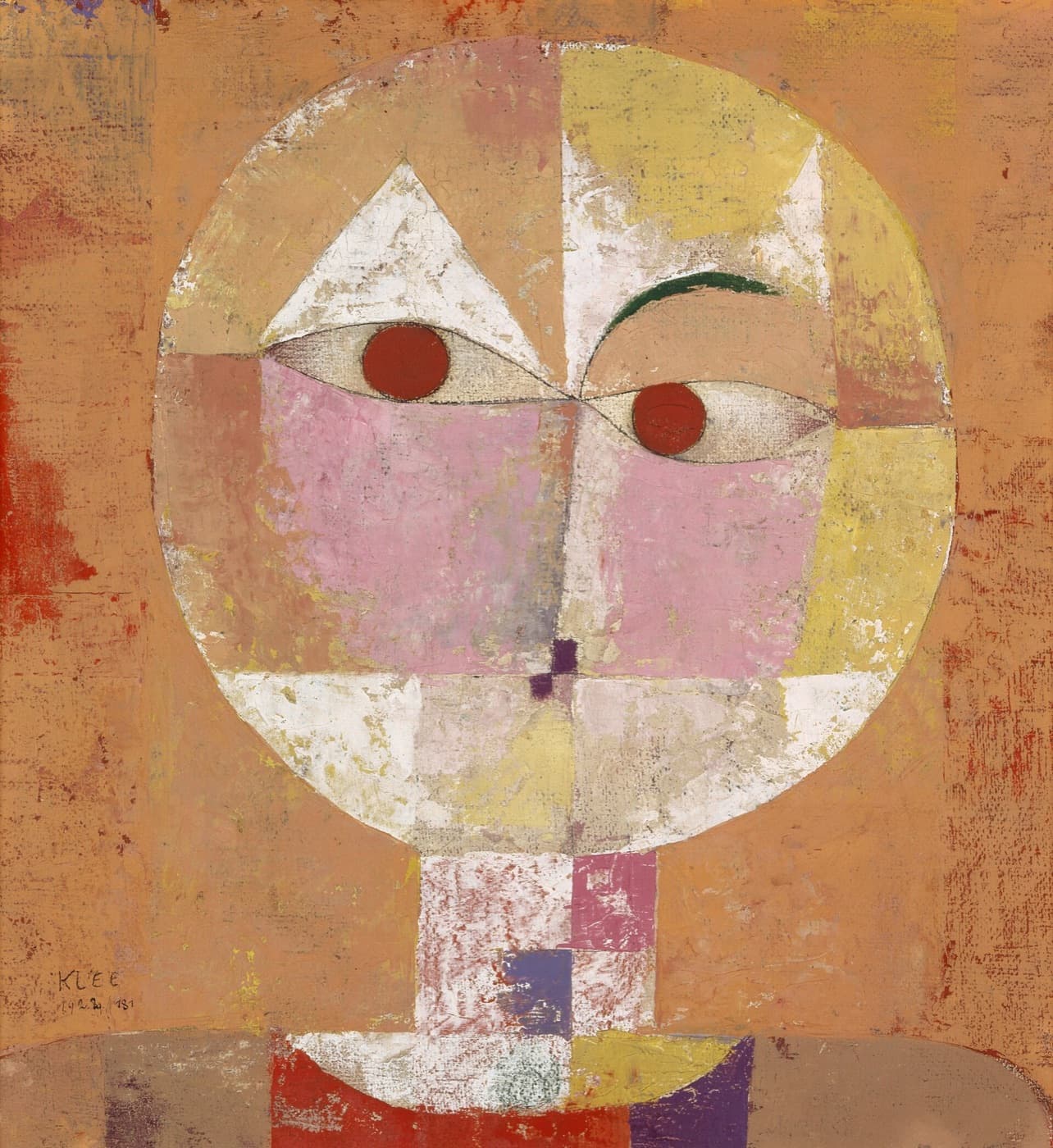
Paul Klee was born near Bern in 1879 to a German father and Swiss mother, trained as a musician as much as a painter, and found his colour on a trip to Tunisia in 1914. He exhibited with the Blaue Reiter, taught at the Bauhaus for a decade alongside Kandinsky, and produced a body of nearly ten thousand works, most of them small, in watercolour, oil transfer, gouache and pen on paper mounted on card. Dismissed by the Nazis in 1933 and included in Degenerate Art, he returned to Switzerland, developed scleroderma, and produced the enormous late series of thick black-line works before his death in 1940.
Klee kept a meticulous handwritten oeuvre catalogue from 1911 onwards, numbering and titling nearly everything, and this is the single most useful document in the field; the Zentrum Paul Klee in Bern holds the archive and the catalogue raisonne. He usually mounted his works on card and inscribed the title and number on the mount, so the original mount is part of the work and must never be discarded. Almost everything is on paper and is severely light-sensitive. Forgeries and misattributions are common.
The prints, and the numbers on the mount
Klee's prints are catalogued by Eberhard Kornfeld, whose catalogue of the graphic work, last revised in 2005, gives each one a K number that dealers and auction catalogues cite. The best known include the early etchings of the Inventions series and the lithograph The Tightrope Walker of 1923, made at the Bauhaus. Prints are on paper like nearly everything else he made, and share its sensitivity to light.
After Klee's death in 1940 most of the estate went, after his widow Lily's death in 1946, to what became the Paul Klee Foundation in Bern and to his son Felix, so works from those sources have a long and documented history. The oeuvre catalogue number Klee wrote on the mount, checked against the Zentrum Paul Klee's catalogue raisonné, is the quickest way to confirm what a work is; a work with no number and no mount needs much more research.
Whitebank Fine Art is an art advisory and gallery, not an auction house, and is not affiliated with any auction house or with the artist, their estate or their representatives. This page describes the range we advise on. Nothing here is investment advice.