
Kees van Dongen valuation
Fauve colour applied to the women of Parisian society, who queued for it.
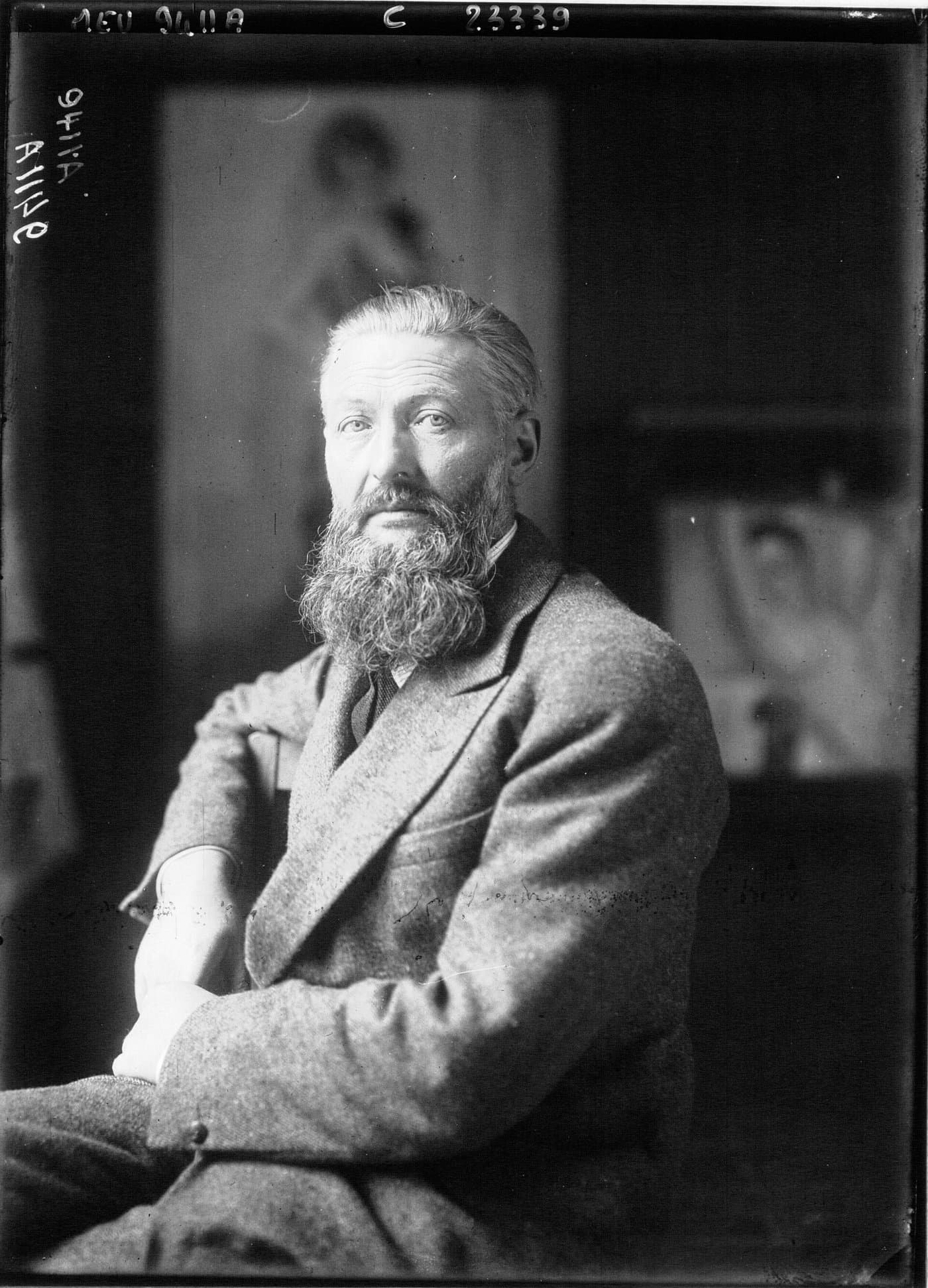
Kees van Dongen was born near Rotterdam in 1877 and moved to Paris in 1897, where he lived for a time in the Bateau-Lavoir alongside Picasso.
What a work by Kees van Dongen is worth
Send photographs and whatever paperwork came with it. The first question is what the work actually is — edition or unique, when, and in what condition — because everything else follows from the answer. A valuation is free, made online from the photographs you send, and it commits you to nothing. We act for sellers across the United Kingdom, Europe and the United States.
Write to info@whitebankfineart.co.uk, or start below.
Bio
Kees van Dongen was born near Rotterdam in 1877 and moved to Paris in 1897, where he lived for a time in the Bateau-Lavoir alongside Picasso. He exhibited with the Fauves in 1905 and pushed the colour further towards the figure than most of them, painting cabaret performers, circus riders and nudes in acid greens, pinks and blacks. After the First World War he became the portraitist Parisian society wanted, painting film stars, aristocrats and financiers in a manner that flattered without softening, and lived accordingly. He died at Monte Carlo in 1968, at ninety-one.
The Fauve years to about 1913 are far ahead of everything else, and the fashionable portraits of the 1920s and 1930s are a large and quite separate market. Van Dongen is heavily forged, particularly in the portrait manner, and the Wildenstein Plattner Institute holds the catalogue raisonne project that is the reference for attribution. Provenance during the occupation years requires the same scrutiny given to any Paris-based painter of the period. There is a body of watercolours, drawings and illustrated books, and a modest print output.
At a glance
- Born
- 26 January 1877, Delfshaven
- Died
- 28 May 1968, Monte Carlo
- Movements
- Fauvism, Die Brücke
More on Wikipedia.
Delfshaven, the Bateau-Lavoir and Monaco
Van Dongen was born at Delfshaven, now part of Rotterdam, and studied at the Rotterdam academy from 1892. In 1906 he and his wife, Augusta Preitinger, moved into the Bateau-Lavoir in Montmartre, where they were friends of Picasso and Fernande Olivier, and he earned extra money selling satirical drawings to the Revue Blanche and running costume balls.
After the First World War his companion, the fashion director Léa Alvin, known as Jasmy Jacob, helped bring him the society clientele of the portraits; his sitters included Arletty and, in 1959, Brigitte Bardot. He lived in Monaco from 1959 and died at Monte Carlo in 1968, and the Nouveau Musée National de Monaco holds a large collection of his work.
The Red Quarter, Die Brücke and the society sitters
As a student in Rotterdam from 1892 to 1897, Van Dongen drew sailors and prostitutes in the Red Quarter by the port, and at the academy he met the painter Augusta Preitinger. He spent several months in Paris in 1897, went back for good in December 1899, and married Preitinger in July 1901. His early work followed the Hague School and symbolism before turning to a rough pointillism. According to Gertrude Stein, it was a painting of Fernande Olivier that first made him notorious, and after the Salon d'Automne of 1905 he was briefly a member of the German Expressionist group Die Brücke.
He taught at the Académie Vitti in 1912. As a society portraitist after the First World War he painted Louis Barthou, Sacha Guitry, Leopold III of Belgium, Anna de Noailles, Madame Grès and Maurice Chevalier, and he remarked that the essential thing was to make the women slim and then enlarge their jewels. He was made a knight of the Legion of Honour in 1926 and an officer in 1954, received the Order of the Crown of Belgium in 1927, and was granted French citizenship in 1929. Kay Thompson put one of his paintings in her book Eloise in Paris in 1957.
Whitebank Fine Art is an art advisory and gallery, not an auction house, and is not affiliated with any auction house or with the artist, their estate or their representatives. This page describes the range we advise on. Nothing here is investment advice.