
Peter Beard valuation
Photographed the collapse of East Africa's elephant herds, then drew, wrote and bled over the prints.
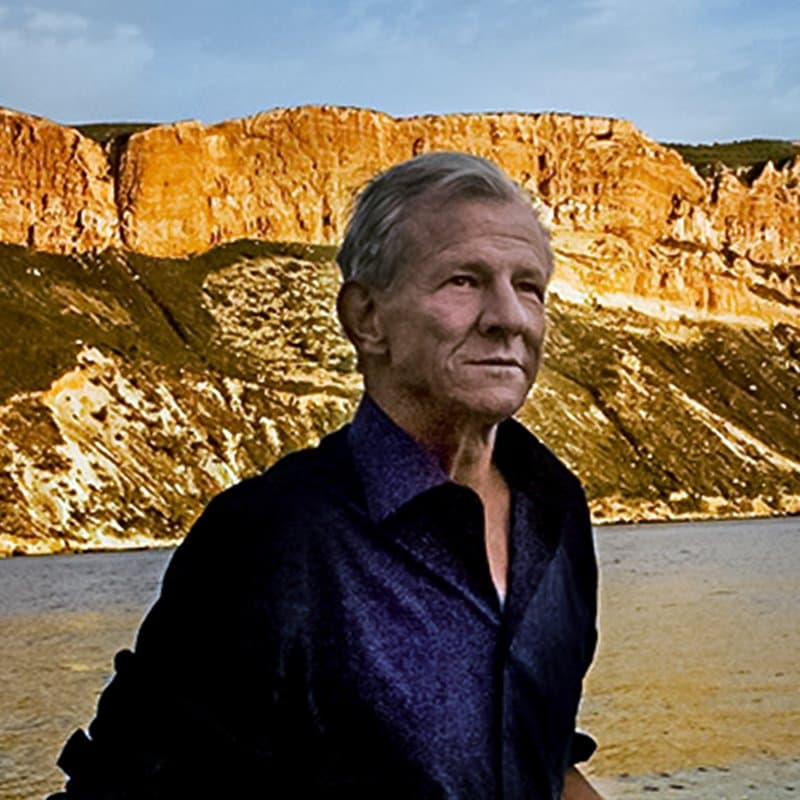
Peter Beard was born in New York in 1938 into a wealthy family, studied art history at Yale, and first went to Kenya in 1955.
What a work by Peter Beard is worth
Send photographs and whatever paperwork came with it. The first question is what the work actually is — edition or unique, when, and in what condition — because everything else follows from the answer. A valuation is free, made online from the photographs you send, and it commits you to nothing. We act for sellers across the United Kingdom, Europe and the United States.
Write to info@whitebankfineart.co.uk, or start below.
Bio
Peter Beard was born in New York in 1938 into a wealthy family, studied art history at Yale, and first went to Kenya in 1955. He bought land outside Nairobi near what had been Karen Blixen's farm, worked in Tsavo through the years when its elephants starved in their thousands, and in 1965 published The End of the Game, a book about the passing of the Africa the colonial hunters had written about. Alongside the photography he kept diaries — thick, obsessive books of pasted photographs, cuttings, pressed insects, handwriting, ink and sometimes his own blood — and that manner spread onto the prints themselves. From the 1970s he was also a fixture of New York society and fashion. He died in 2020.
Almost nothing under his name is a plain photograph, and that is what a valuation turns on. Most works are gelatin silver prints, often large, reworked by hand with ink, paint, collage, found material, handwriting and animal or human blood, so two prints from the same negative can be entirely different works, and the extent and quality of the additions matter more than the image underneath. Unworked prints are a separate and plainer category. Signature and date are usually written into the image. Condition is a real issue: collage elements lift, ink and blood change colour, and the surfaces were never made to be handled. Peter Beard Studio is the reference for attribution.
Almost nothing here is just a photograph
The prints were treated as surfaces to work on rather than as finished objects. He drew and wrote across them in ink, collaged onto them, pressed in leaves and ephemera, and used animal blood as a medium. The consequence is that two prints of the same image can be entirely different objects, and the worked ones are not editions in any ordinary sense even when an edition number is written somewhere on them.
So the question is never only which image it is. It is what has been done to this particular sheet, by whom, and when — some works were made over years, and some involved studio assistants working under direction. The applied media are also fragile: ink fades, organic material degrades, collage lifts, and none of it can be restored the way a straightforward photographic print can. Photograph the whole sheet in daylight without flash, then the worked areas raked from one side, then the reverse.
Zululand, Hog Ranch and the books
At seventeen he went to Africa with Quentin Keynes, the great-grandson of Charles Darwin, to film the white and black rhinos of Zululand, and at Yale his teachers included Josef Albers, Richard Lindner and Vincent Scully. After graduating in 1961 he went back to Kenya, where he documented the deaths of some 35,000 elephants in Tsavo and made Hog Ranch, in the Ngong Hills, his base for the rest of his life. He was badly injured by an elephant in 1996.
His books after The End of the Game include Eyelids of Morning, on crocodiles, with Alistair Graham in 1973, Longing for Darkness, the tales of Karen Blixen's cook Kamante Gatura, in 1975, and Zara's Tales, written for his daughter, in 2004; Taschen's large monograph followed in 2006. His first exhibition was at the Blum Helman Gallery in New York in 1975, with museum shows at the International Center of Photography in 1977 and the Centre national de la photographie in Paris in 1997. The Peter Beard Studio and Archive, founded by Peter and Nejma Beard, holds the record of his work.
Best auction results
- Orphan Cheetah Triptych, 1968 $662,500
- Photographic triptych · New York · 10 October 2017
- Publicly reported
- The artist's auction record.
Results as reported at the time of sale, inclusive of buyer's premium. They are a record of what specific works achieved on specific days, not a guide to what any other work is worth.
Whitebank Fine Art is an art advisory and gallery, not an auction house, and is not affiliated with any auction house or with the artist, their estate or their representatives. This page describes the range we advise on. Nothing here is investment advice.