
Art News ·
The print market in 2026: what sold, what stalled, and what it means if you own one
By Rich
The art market spent three years being described as soft. In 2026 that stopped being the useful description. US auction sales across Christie's, Sotheby's and Phillips are reported to have risen 23% in 2025 to $3.17 billion — the first annual increase since 2022 — and the momentum carried. The three houses are reported to have sold around $2.5 billion in New York in May alone, against roughly $1.3 billion in the same week a year earlier. ArtTactic's mid-year figures put Christie's at $3.4 billion for the first half and Sotheby's at $2.8 billion, each up about 71% year on year.
That sounds like a rising tide. It is not one, and the distinction matters a great deal if you are holding something and wondering whether this is the moment.
The recovery is top-heavy and bottom-heavy at once
The headline numbers are being carried by a small number of very large lots. Jackson Pollock's Number 7A (1948) is reported at $181.2 million, close to three times the artist's previous auction record. Henri Matisse's La Chaise lorraine led a $303.3 million Sotheby's Modern evening sale at a reported $48.4 million.
Underneath that, something quite different is happening: a reported 94% of auction transactions in the period fell below $1 million. Volume is healthy. What has been repriced, hard, is the ultra-contemporary material that ran hottest in 2021 — the average work in that category is now reported at $15,629, around 72% below its peak, which we wrote about at greater length in The 70% Correction.
So there are two markets. One is setting records. The other is trading briskly at prices that would have looked disappointing four years ago. Most owners are in the second.
Prints had the better year
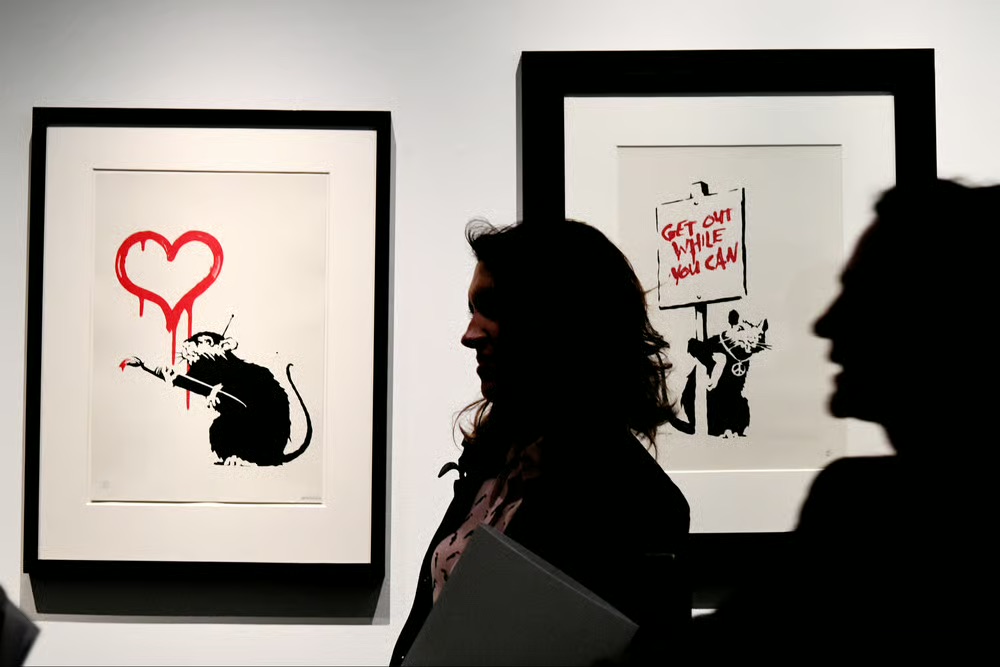
Editions are where the recovery has been most legible, because editions come up often enough to produce a record rather than an anecdote.
David Hockney's Arrival of Spring series has been the clearest case. Sotheby's first dedicated sale of the series, in October 2025, is reported to have made more than £6 million across 17 works from a single collection with nothing unsold. A second tranche followed this year: 16 works reported at £3.5 million hammer, some 136% above the low estimate. A previously unseen edition of ten, The Arrival of Spring, 30th May, is reported at £512,000 with fees.
The April print sales in New York produced records across the Pop canon. Andy Warhol's black Marilyn (F. & S. II.24) is reported to have set two within weeks of each other — a main-edition impression at $572,000 at Doyle, and a proof at $406,400 at Christie's. His African Elephant from Endangered Species is reported at $170,000 against a $120,000 high estimate. Keith Haring's orange Andy Mouse is reported at $280,000, a record for the image.
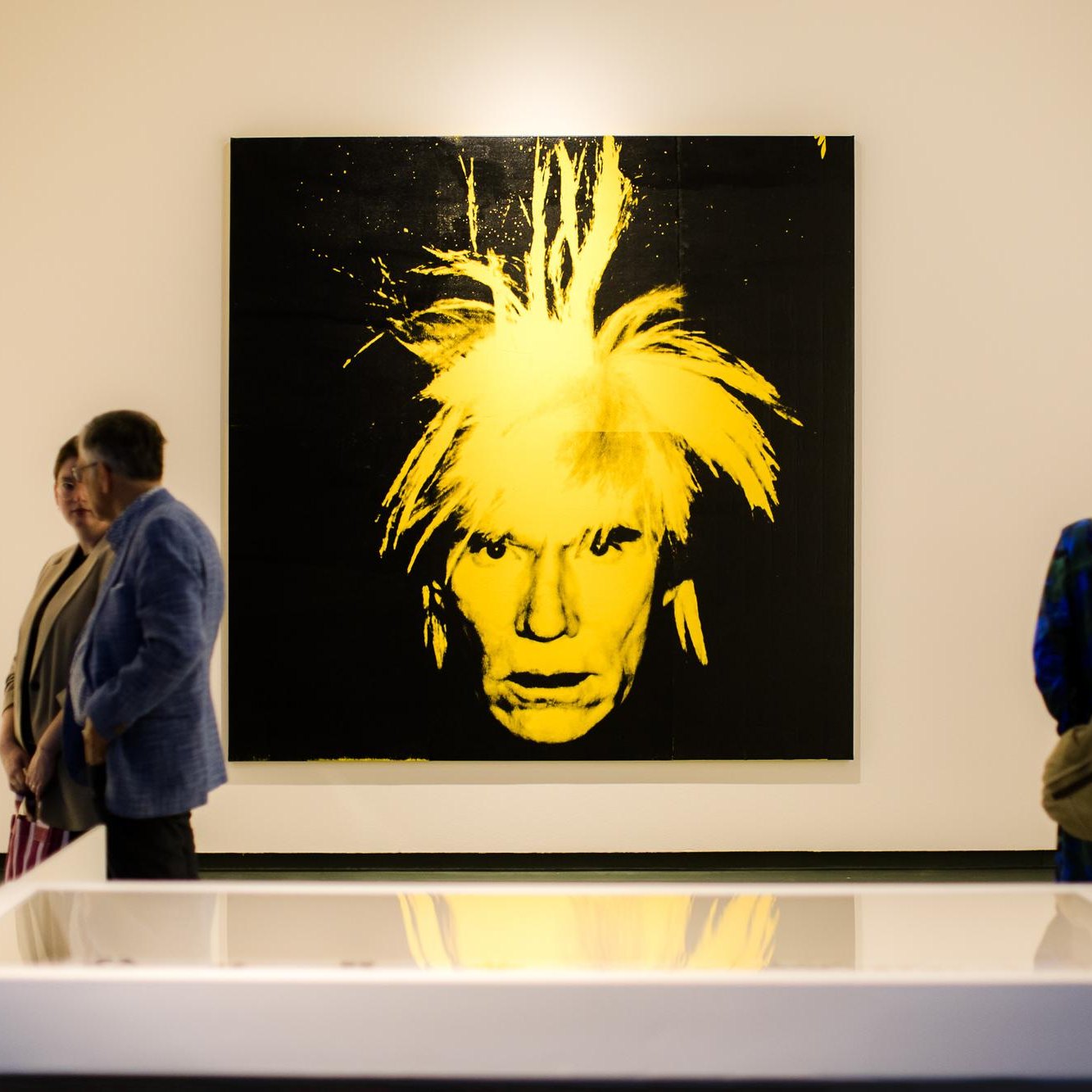
Banksy remains the most actively traded print market of all, and the most selective. A rare artist's proof of Kate Moss is reported at £179,200 against a £70,000 high estimate; Paranoid Pictures at Christie's is reported at £210,000 against the same £70,000 — roughly three times the top of the range. What those two share is not the artist. It is scarcity within the artist: a proof, a rare colourway, an image everyone recognises on sight.
KAWS is the useful counter-example. Entry and mid-level pieces keep changing hands in volume, while top prices fell after 2019 and have stayed there. A market can be liquid and flat at the same time, and a seller who reads "liquid" as "rising" will be disappointed by the invoice.
The gap between titles is the whole story

Every figure above is a particular image, in a particular state, with particular paperwork. None of them is a statement about the artist.
This is the single most expensive misunderstanding we see. An owner reads that Banksy prints are strong, or that Damien Hirst editions are deep, or that Tracey Emin is having a moment, and prices their own sheet off the artist's reputation rather than off its own title, its edition, its condition and its documentation. Two prints by the same hand, the same year, the same size, can be separated by a factor of ten — and the signed and unsigned versions of one image are two different markets, not one market with a discount.
Which is why our own reference pages are built per title rather than per artist: the Banksy price guide and the Banksy print calculator work from published per-title figures, and the artist sections for Warhol, Hockney, Emin and Hirst set out which category a given sheet actually belongs to before any number is attached to it.
If you are thinking about selling
A recovering market is a better one to sell into than a falling one, but timing is the smallest of the decisions in front of you. The larger ones are which route, which saleroom, and on what terms.
How to sell sets out the routes in plain terms. Selling at auction lists every fee that comes off a hammer price and how those are negotiated; private sales covers the quieter route, which often suits work that has been offered before. If you know the artist already, the seller's guides go further: selling a Banksy, an Andy Warhol print, a David Hockney, a Damien Hirst or a Tracey Emin.
And if you are earlier than that, a valuation costs nothing and commits you to nothing. Photographs of the front, the reverse, the signature and any numbering are enough to begin — the reverse more often than the front is where the edition is proved.
Figures described here are third-party reported and are included for context. They are not a valuation of any individual work. Whitebank Fine Art is an art advisory and gallery, not an auction house, and is not affiliated with any auction house or with the artists named, their estates or their representatives. Nothing here is investment advice.