
Wassily Kandinsky valuation
Gave up a law professorship at thirty and painted his way out of the recognisable world.
Wassily Kandinsky was born in Moscow in 1866, took a post teaching law, and abandoned it at thirty for art school in Munich.
What a work by Wassily Kandinsky is worth
Send photographs and whatever paperwork came with it. The first question is what the work actually is — edition or unique, when, and in what condition — because everything else follows from the answer. A valuation is free, made online from the photographs you send, and it commits you to nothing. We act for sellers across the United Kingdom, Europe and the United States.
Write to info@whitebankfineart.co.uk, or start below.
Bio
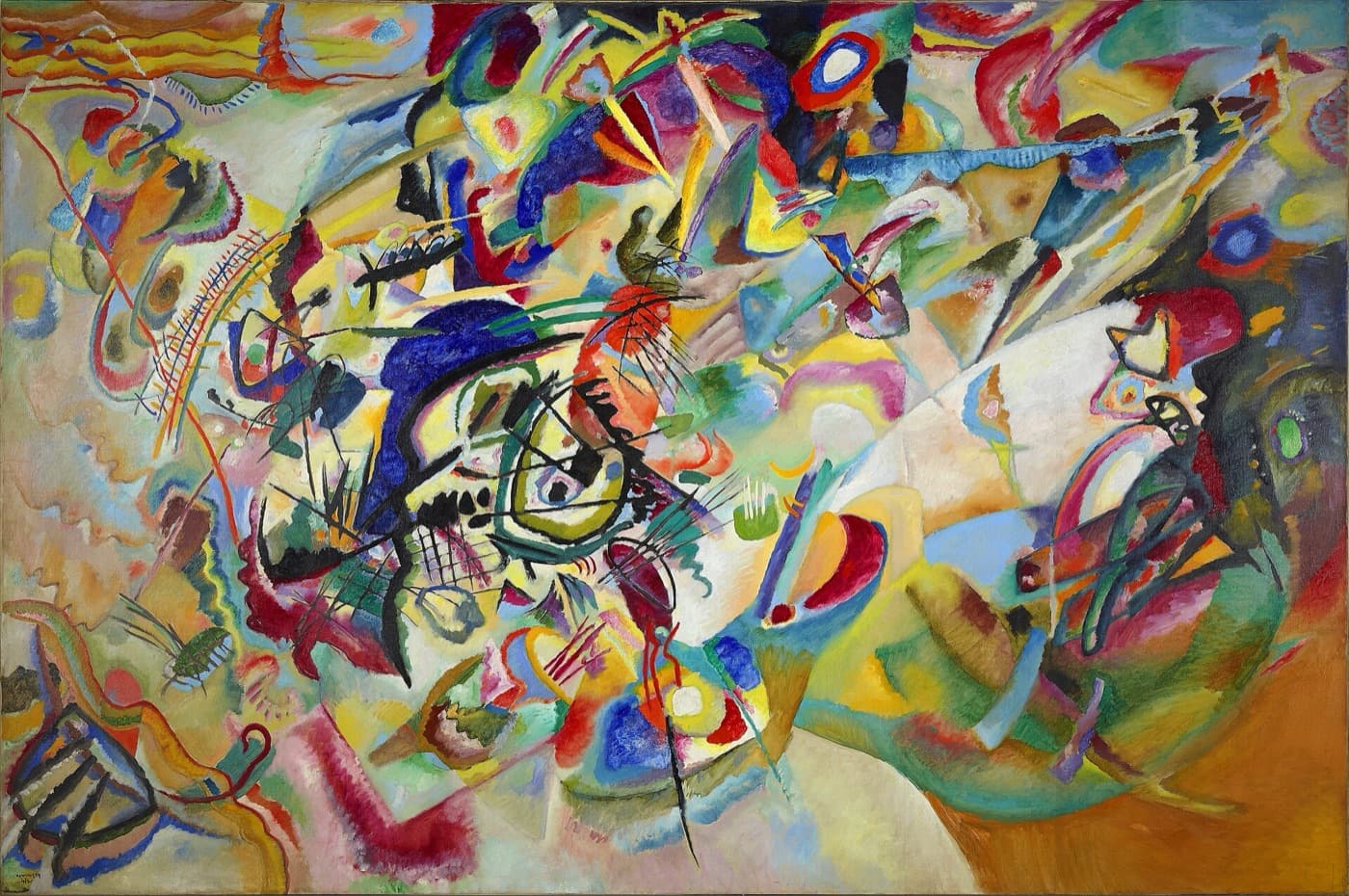
Wassily Kandinsky was born in Moscow in 1866, took a post teaching law, and abandoned it at thirty for art school in Munich. He wrote Concerning the Spiritual in Art, founded the Blaue Reiter with Franz Marc in 1911, and produced around that year the first paintings in which the subject has genuinely gone — Improvisations and Compositions built from colour and line understood as musical rather than descriptive. He returned to Russia for the revolution, came back to teach at the Bauhaus where the work became geometric and precise, and ended in Paris, where he died in 1944.
The Munich pre-war years and the Bauhaus period are the two peaks of the market. Provenance requires attention on two fronts: Soviet-era nationalisation and dispersal, and the German confiscations of 1937, both of which affect title. The Roethel and Benjamin catalogue raisonne is the reference for paintings and Roethel for the graphic work. Kandinsky's printed output, particularly Klange and the Bauhaus portfolios, is important and well documented. Watercolours and gouaches are numerous, are the most frequently forged part of the output, and are light-sensitive.
At a glance
- Born
- 4 December 1866, Moscow
- Died
- 13 December 1944, Neuilly-sur-Seine
- Movements
- Expressionism, Symbolism, Bauhaus
More on Wikipedia.
Klänge and Kleine Welten
The two most important print publications are Klänge (Sounds), a book of his poems with fifty-six woodcuts, published by R. Piper in Munich in 1913 in an edition of three hundred signed and numbered copies, and Kleine Welten (Small Worlds), a portfolio of twelve prints made at the Bauhaus and published in Berlin in 1922, four each in drypoint, woodcut and lithography, in an edition of 230.
Single sheets from both are on the market, often from broken copies of the book or portfolio, and they are original prints in their own right. Their value depends on which image it is, whether the sheet is signed, its colour and its condition. Later reproductions of the Bauhaus images, especially on cards and posters, are common and easily mistaken for the real thing once framed.
Whitebank Fine Art is an art advisory and gallery, not an auction house, and is not affiliated with any auction house or with the artist, their estate or their representatives. This page describes the range we advise on. Nothing here is investment advice.