Art News ·
Art News: Famous photographers to know, from street and portrait to landscape and war, and the photography exhibitions in London this winter
By Whitebank Fine Art
The names that come up first are usually Ansel Adams, Henri Cartier-Bresson, Dorothea Lange, Annie Leibovitz and David Bailey. Here are those famous photographers and the others worth knowing, grouped by the kind of picture they made. After that come the photography exhibitions in London this winter, the most expensive photographs ever sold and how to tell what kind of print you own.
It is a good winter to see the real thing. Light and Magic at Tate Modern and William Eggleston at The Photographers' Gallery both run until 21 February, and Nan Goldin opens at the Hayward Gallery on 24 November.
Famous street photographers
Street photography is made in public places, from chance encounters nobody arranged.
- Eugène Atget (1857–1927) spent about thirty years recording old Paris, its shopfronts, courtyards and street traders, and sold the prints to artists, libraries and museums.
- Henri Cartier-Bresson (1908–2004) is the name most people reach for first. His 1952 book, published in English as The Decisive Moment, gave street photography its best-known phrase, and he co-founded the Magnum agency in 1947.
- Robert Frank (1924–2019) drove across the United States in the mid-1950s for The Americans, published in France in 1958 and in the United States a year later.
- Saul Leiter (1923–2013) photographed New York in colour from the late 1940s, often through rain and steamed-up windows. The book Early Color, in 2006, brought him a far wider audience.
- Fan Ho (1931–2016) turned the streets of Hong Kong in the 1950s and 1960s into studies of smoke and slanting light. His Smoky World, 1959, is the lead image of Light and Magic at Tate Modern.
- Vivian Maier (1926–2009) was a Chicago nanny whose negatives, unseen in her lifetime, turned up in a storage locker in 2007.
- Garry Winogrand (1928–1984) photographed New York in the 1960s at speed, often with the horizon tilted.
- Martin Parr (1952–2025) turned saturated colour and hard flash on the British at leisure, most famously at New Brighton in The Last Resort, published in 1986.
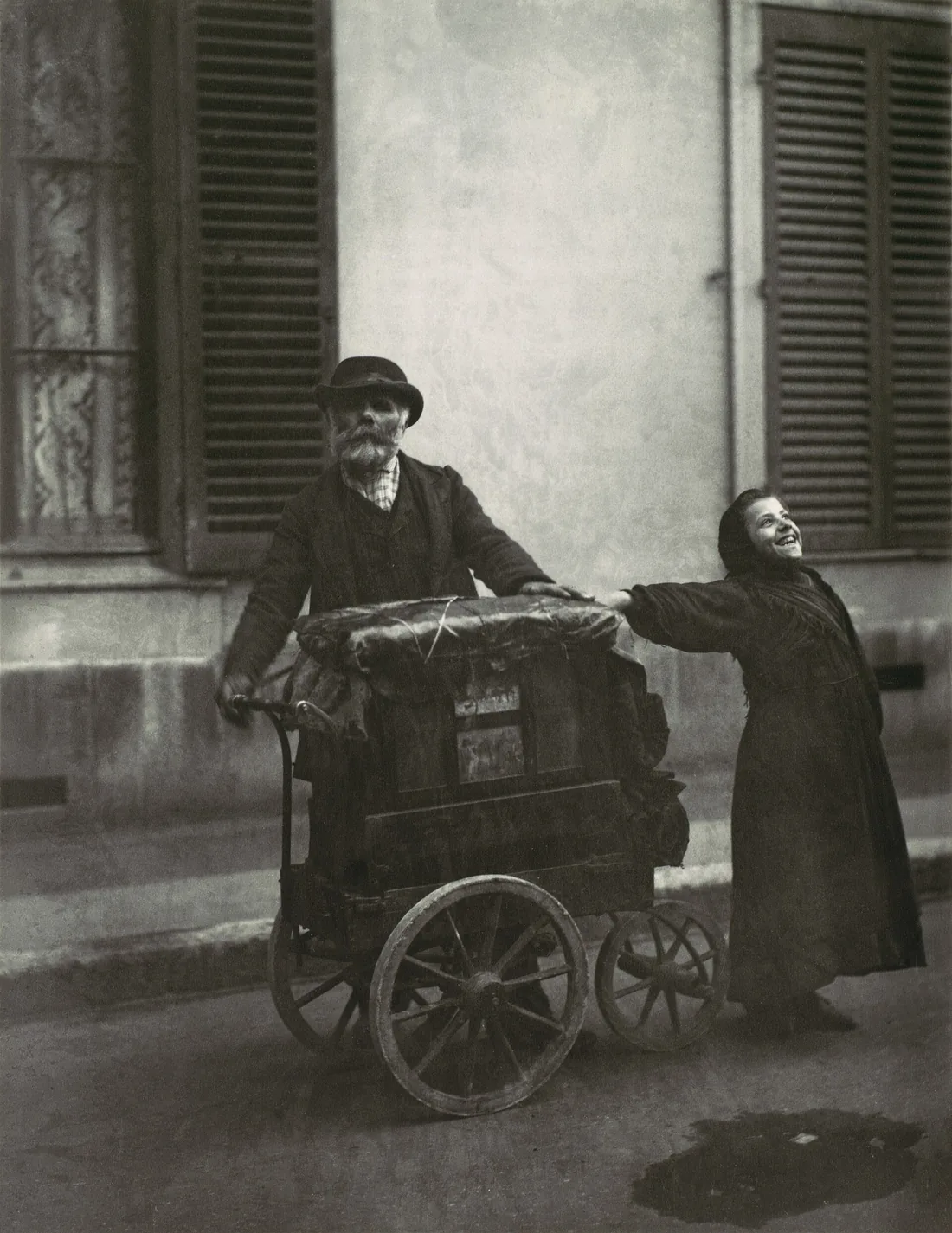
Eugène Atget, Street Musicians, 1898–99, printed 1956. The Metropolitan Museum of Art, New York. Public domain, via Wikimedia Commons.
Famous portrait photographers
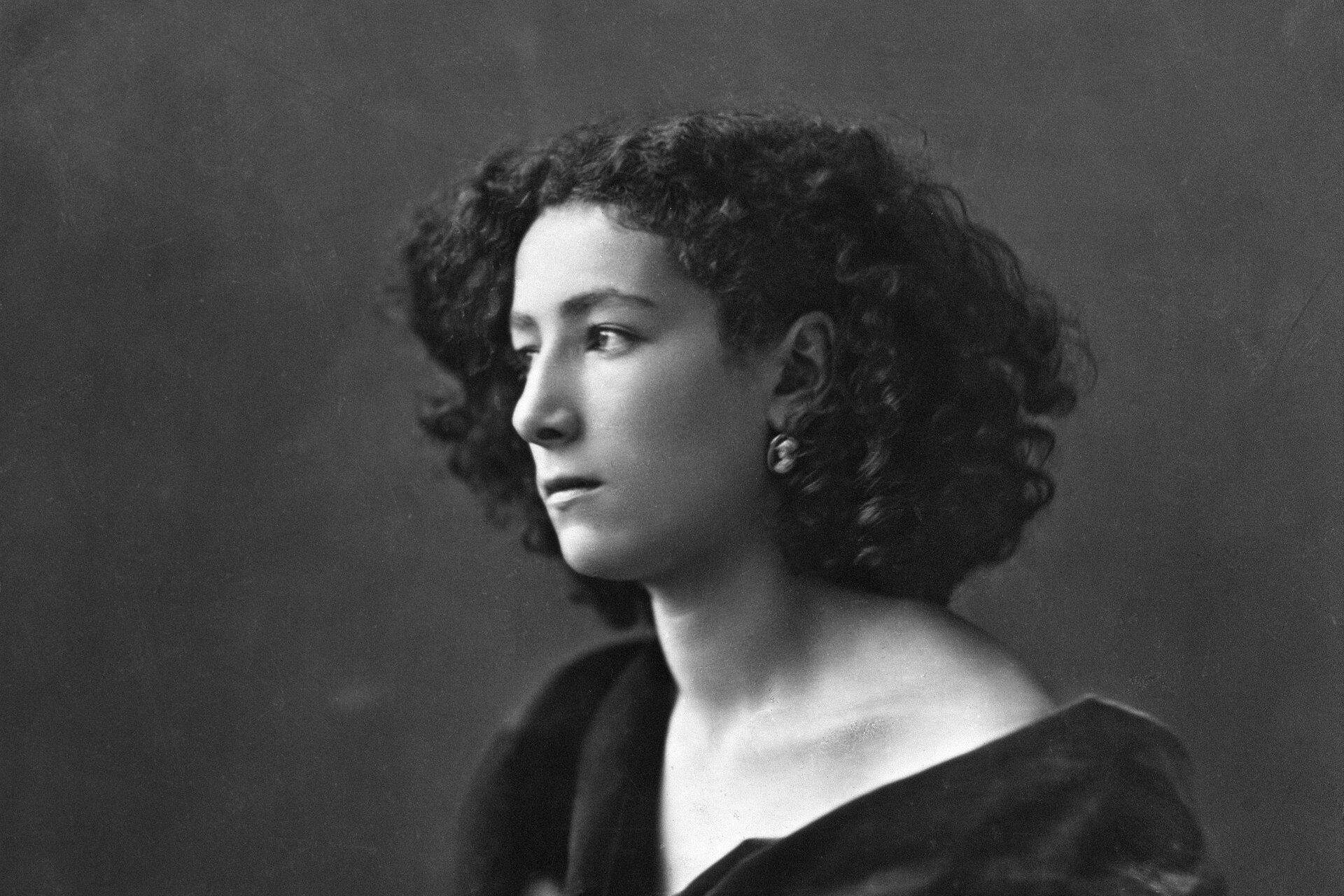
- Nadar (1820–1910) photographed the Paris of his day, from Baudelaire to the young Sarah Bernhardt on our cover. The first Impressionist exhibition, in 1874, was held in his former studio.
- Julia Margaret Cameron (1815–1879) was given a camera at 48 and went on to make soft, close Victorian heads. Julia Jackson, below, was her niece and later the mother of Virginia Woolf and Vanessa Bell, who features in Tate Britain's Bloomsbury exhibition this winter.
- Yousuf Karsh (1908–2002) made the scowling Winston Churchill of 1941 by taking the cigar out of his sitter's mouth just before the exposure.
- Irving Penn (1917–2009) stood his sitters in the same plain corner and printed in platinum for decades.
- Richard Avedon (1923–2004) put sitters against white paper with nowhere to hide, most memorably in In the American West, 1985.
- Diane Arbus (1923–1971) photographed twins, giants and suburban families with the same square, direct gaze.
- Robert Mapplethorpe (1946–1989) gave flowers, portraits and sex the same formal control.
- Annie Leibovitz (born 1949) made her name at Rolling Stone and then Vanity Fair. Her John Lennon and Yoko Ono, of 1980, is among the best-known portraits ever made for a magazine.
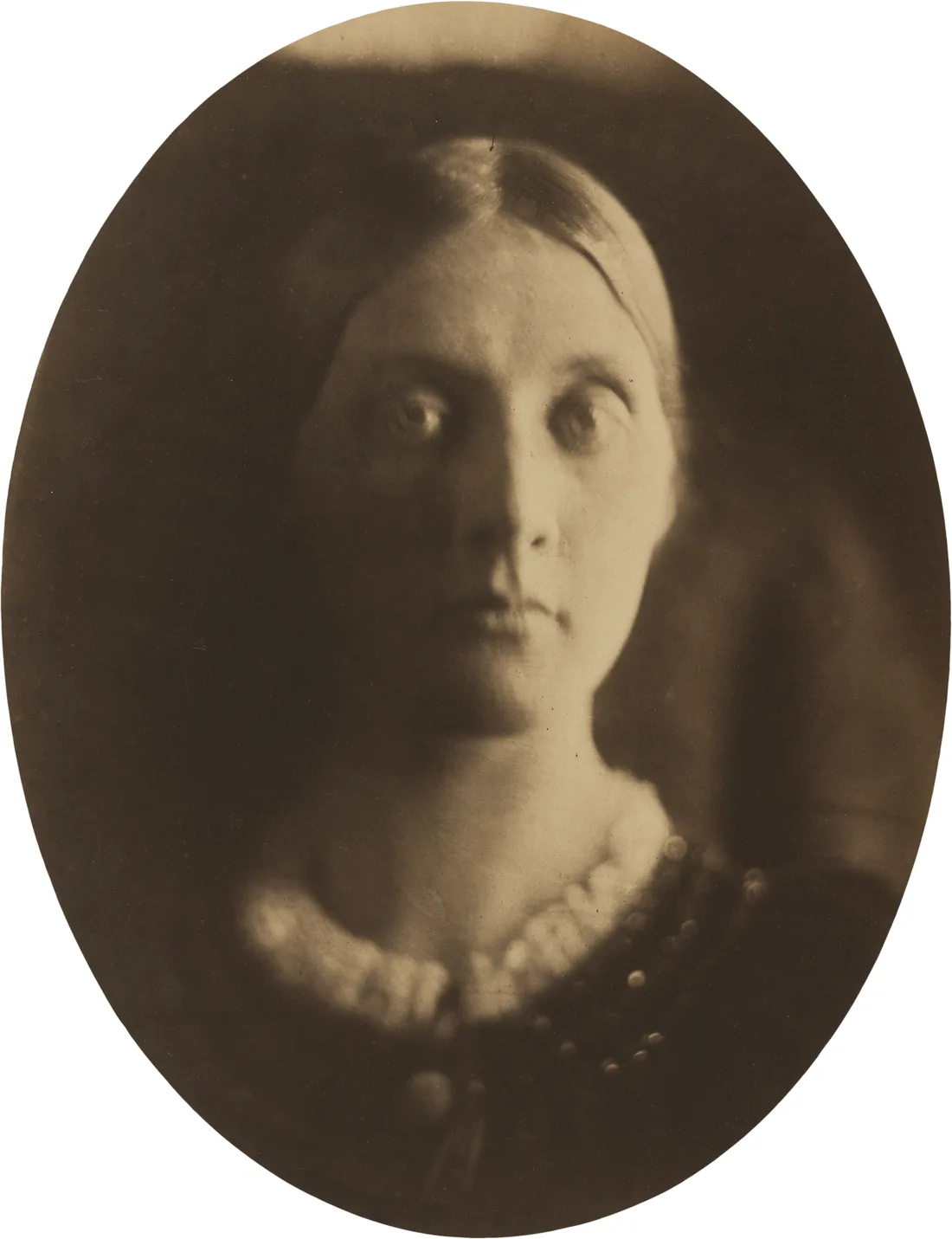
Julia Margaret Cameron, Julia Jackson, 1867. National Gallery of Art, Washington. Public domain, via Wikimedia Commons.
Famous fashion photographers
Avedon and Penn belong here too, since both did some of their finest work for Harper's Bazaar and Vogue.
- Cecil Beaton (1904–1980) worked for Vogue for decades and photographed the coronation of Elizabeth II in 1953.
- David Bailey (born 1938) is the photographer of the London sixties, from Jean Shrimpton in Vogue to the Krays in his Box of Pin-Ups of 1965.
- Helmut Newton (1920–2004) made fashion about power, staged in hotel corridors and swimming pools, and printed it large in his Big Nudes of 1981.
- Tim Walker (born 1970) builds elaborate fantasy sets for his pictures, and his Fairyland is at the National Portrait Gallery until 7 February.
Famous landscape photographers
- Carleton Watkins (1829–1916) carried a mammoth-plate camera into Yosemite in 1861, and his pictures helped persuade Congress to protect the valley in 1864.
- Ansel Adams (1902–1984) is the best known of all. The Tetons and the Snake River, below, went into space on the Voyager Golden Record in 1977, and Moonrise, Hernandez, New Mexico, of 1941, is his best-known print.
- Fay Godwin (1931–2005) walked the British uplands for Remains of Elmet, with Ted Hughes, in 1979, and for Land, in 1985.
- Robert Adams (born 1937) turned from the wilderness to the tract houses and car parks of the American West, and showed them in New Topographics in 1975.
- Sebastião Salgado (1944–2025) spent eight years on Genesis, published in 2013, photographing the last wild places.
- Hiroshi Sugimoto (born 1948) has photographed the sea since 1980, with the horizon dead centre.
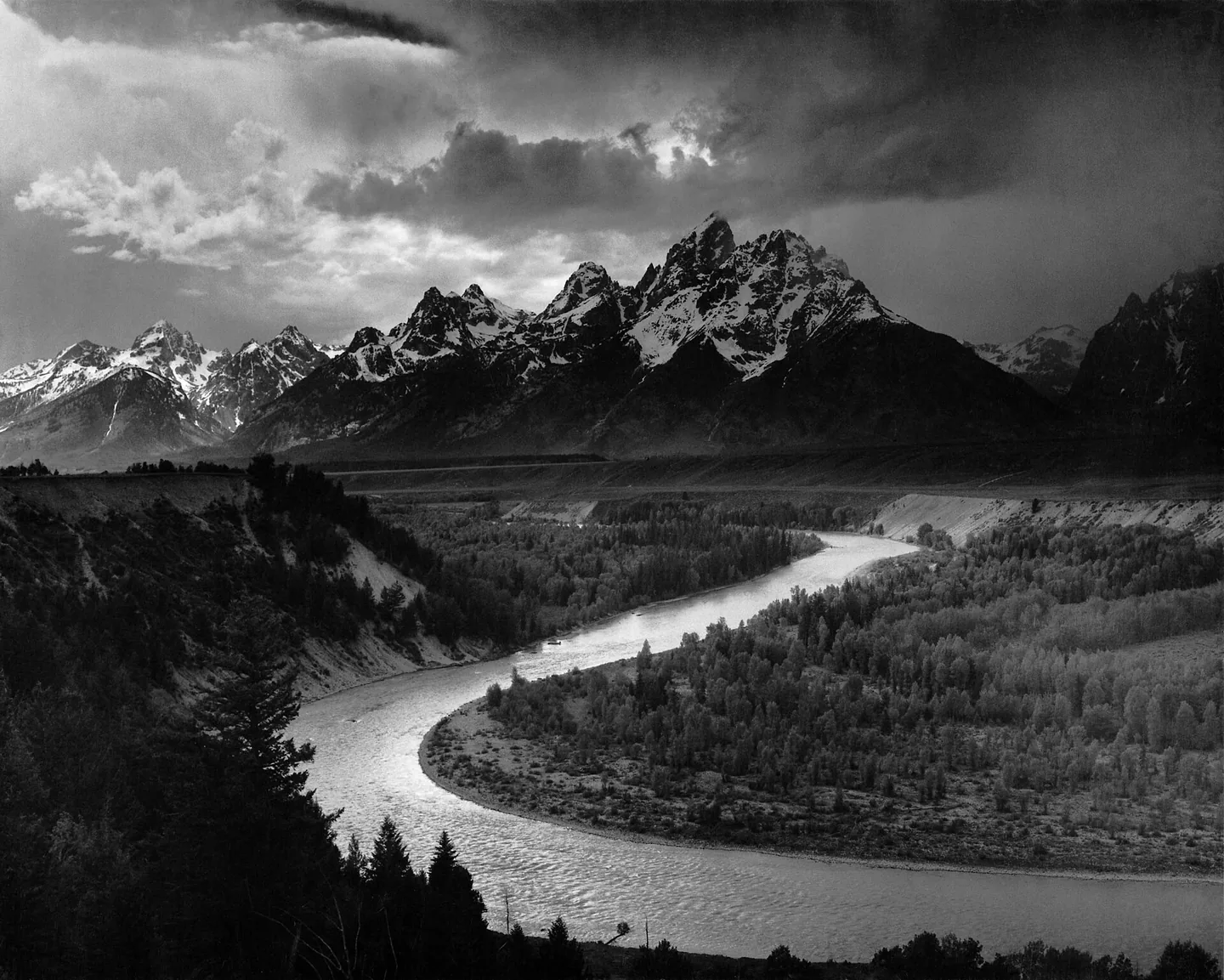
Ansel Adams, The Tetons and the Snake River, 1942. US National Archives. Public domain, via Wikimedia Commons.
Famous war photographers
- Roger Fenton (1819–1869) went to the Crimea in 1855 with a horse-drawn darkroom. He made two exposures of the Valley of the Shadow of Death, below, one with cannonballs on the road and one without, and people still argue over whether they were moved.
- Robert Capa (1913–1954) photographed the Spanish Civil War, landed with American troops on D-Day and co-founded Magnum.
- Gerda Taro (1910–1937) covered the Spanish Civil War alongside Capa, and is often called the first woman to photograph the front line of a war.
- Lee Miller (1907–1977) went from Vogue model to Vogue's war correspondent, from the Blitz to the liberation of Buchenwald and Dachau.
- Don McCullin (born 1935) photographed Vietnam, Biafra and Cyprus, then went home to photograph the Somerset winter.
- Steve McCurry (born 1950) made his Afghan Girl portrait in 1984, and it was the National Geographic cover the following year.
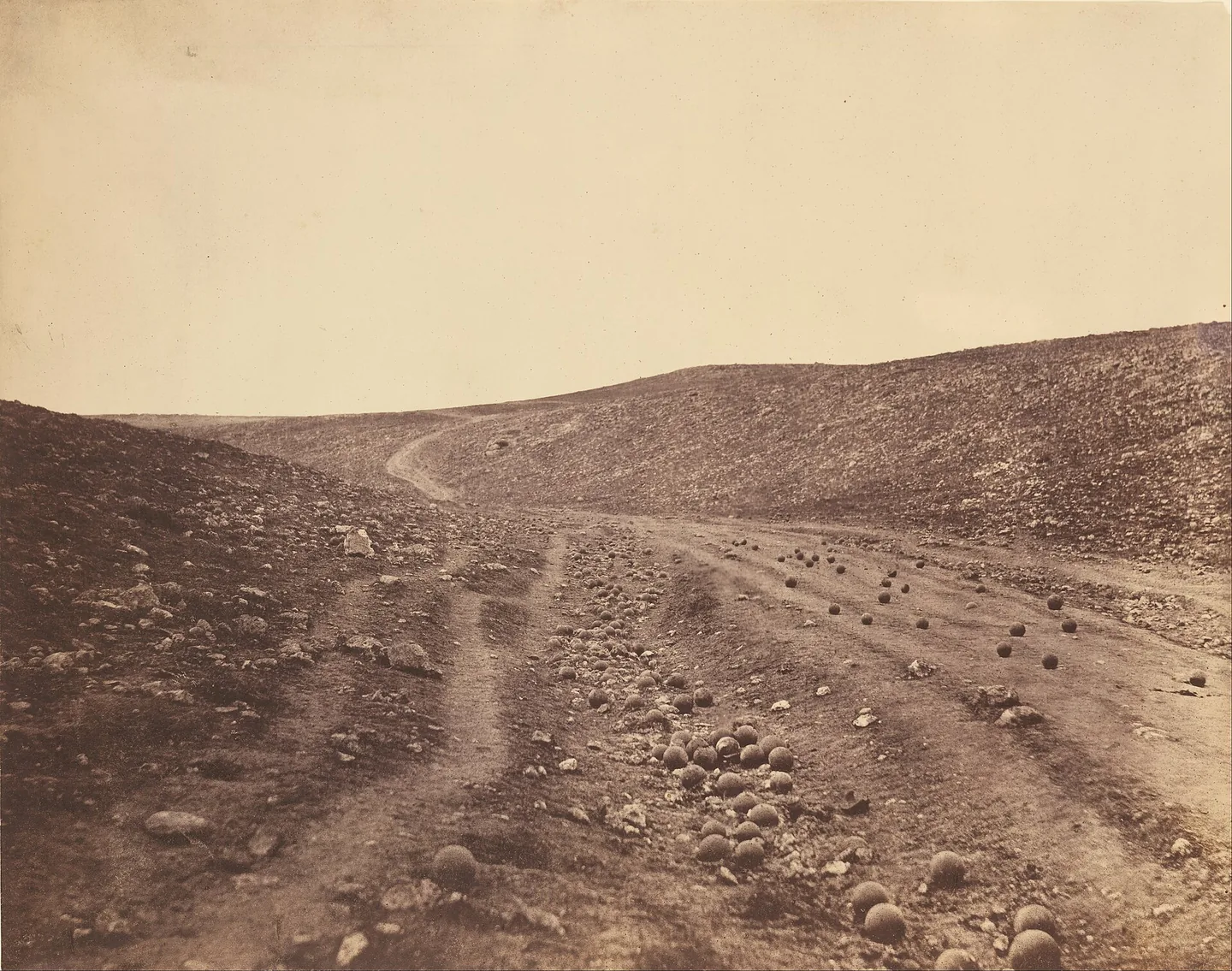
Roger Fenton, Valley of the Shadow of Death, 1855. Public domain, via Wikimedia Commons.
Famous British photographers
Bailey, Cameron, Fenton, Godwin, McCullin and Parr are all above. These are the others to know.
- William Henry Fox Talbot (1800–1877) worked out the negative and print at Lacock Abbey in Wiltshire, the method photography then used for more than 150 years. The Open Door, below, is a plate from his book The Pencil of Nature, of 1844–46.
- John Thomson (1837–1921) photographed the working people of London for Street Life in London, published in 1877.
- Bill Brandt (1904–1983) documented England as an outsider, having been born in Hamburg, and returned to his negatives decades later to print them in stark black and white.
- Chris Killip (1946–2022) spent years in the north-east of England for In Flagrante, published in 1988.
- Tish Murtha (1956–2013) photographed young people in Newcastle for Elswick Kids and Youth Unemployment.
- Terry O'Neill (1938–2019) photographed the famous when they were still relaxed about it, from the Beatles to Faye Dunaway by the pool.
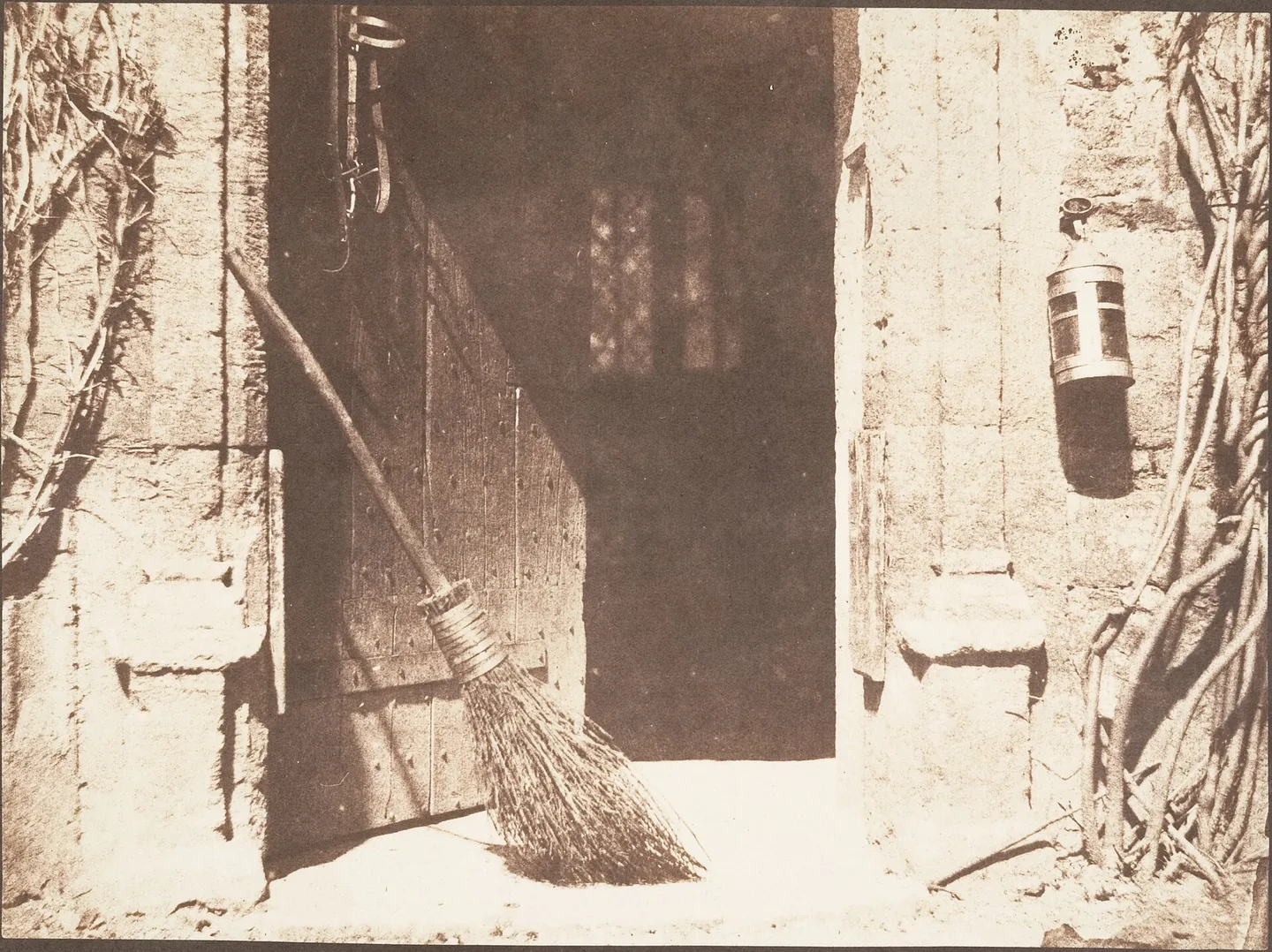
William Henry Fox Talbot, The Open Door, before May 1844. The Metropolitan Museum of Art, New York. Public domain, via Wikimedia Commons.
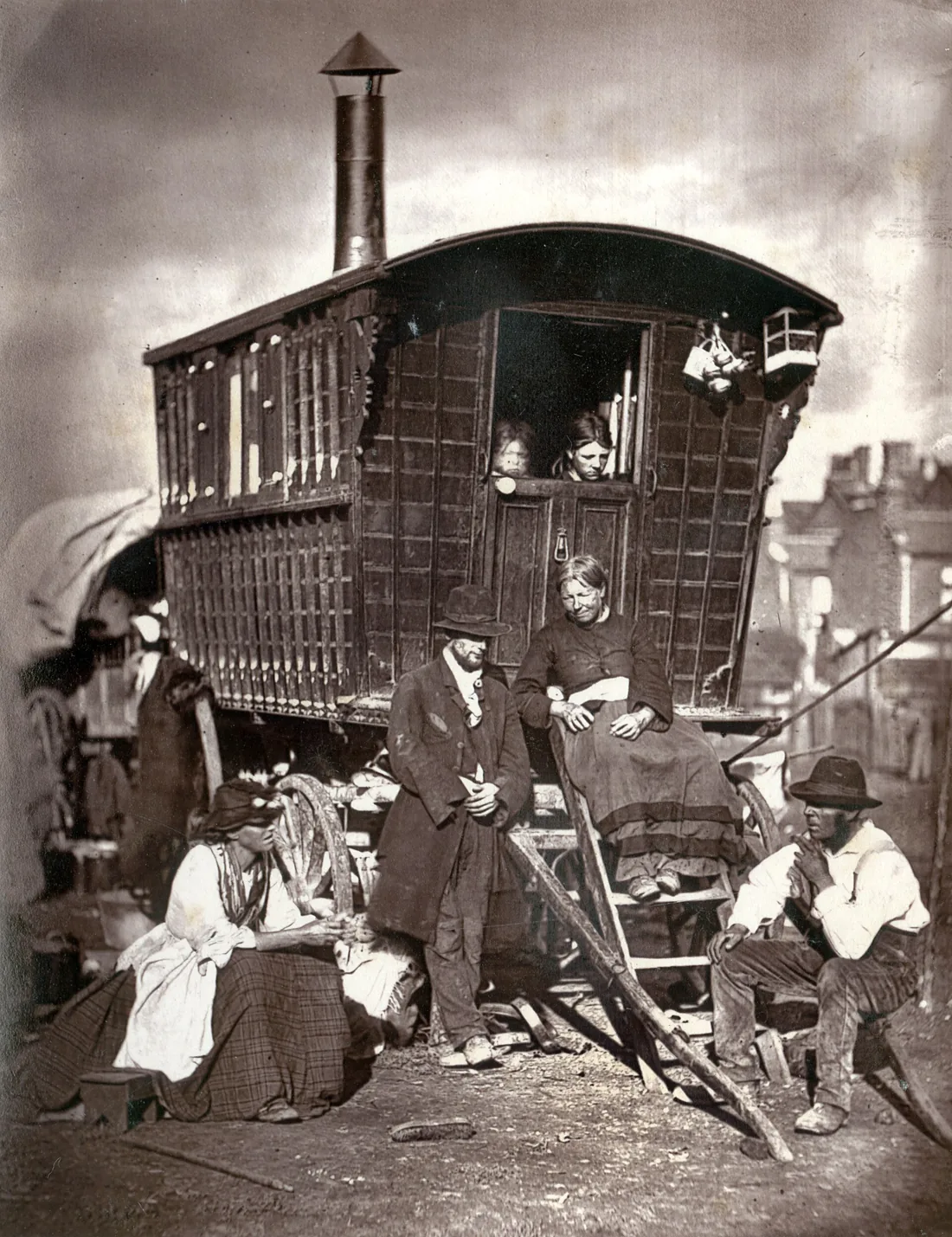
John Thomson, London Nomades, from Street Life in London, 1877. Public domain, via Wikimedia Commons.
Famous female photographers
Cameron, Maier, Arbus, Leibovitz, Godwin, Taro, Miller and Murtha are above. Add these.
- Anna Atkins (1799–1871) made Photographs of British Algae from 1843, in deep blue cyanotype, and it is often called the first book illustrated with photographs.
- Dorothea Lange (1895–1965) photographed the Great Depression for the US government. Migrant Mother, below, was taken in California in 1936.
- Nan Goldin (born 1953) photographed her friends, lovers and herself through love, drugs, violence and AIDS in The Ballad of Sexual Dependency.
- Cindy Sherman (born 1954) photographs only herself, in character, and began with the Untitled Film Stills of 1977–80.
- Sally Mann (born 1951) photographed her children in Immediate Family, of 1992, and later the Southern landscape on glass.
- Francesca Woodman (1958–1981) made small, blurred self-portraits in empty rooms.
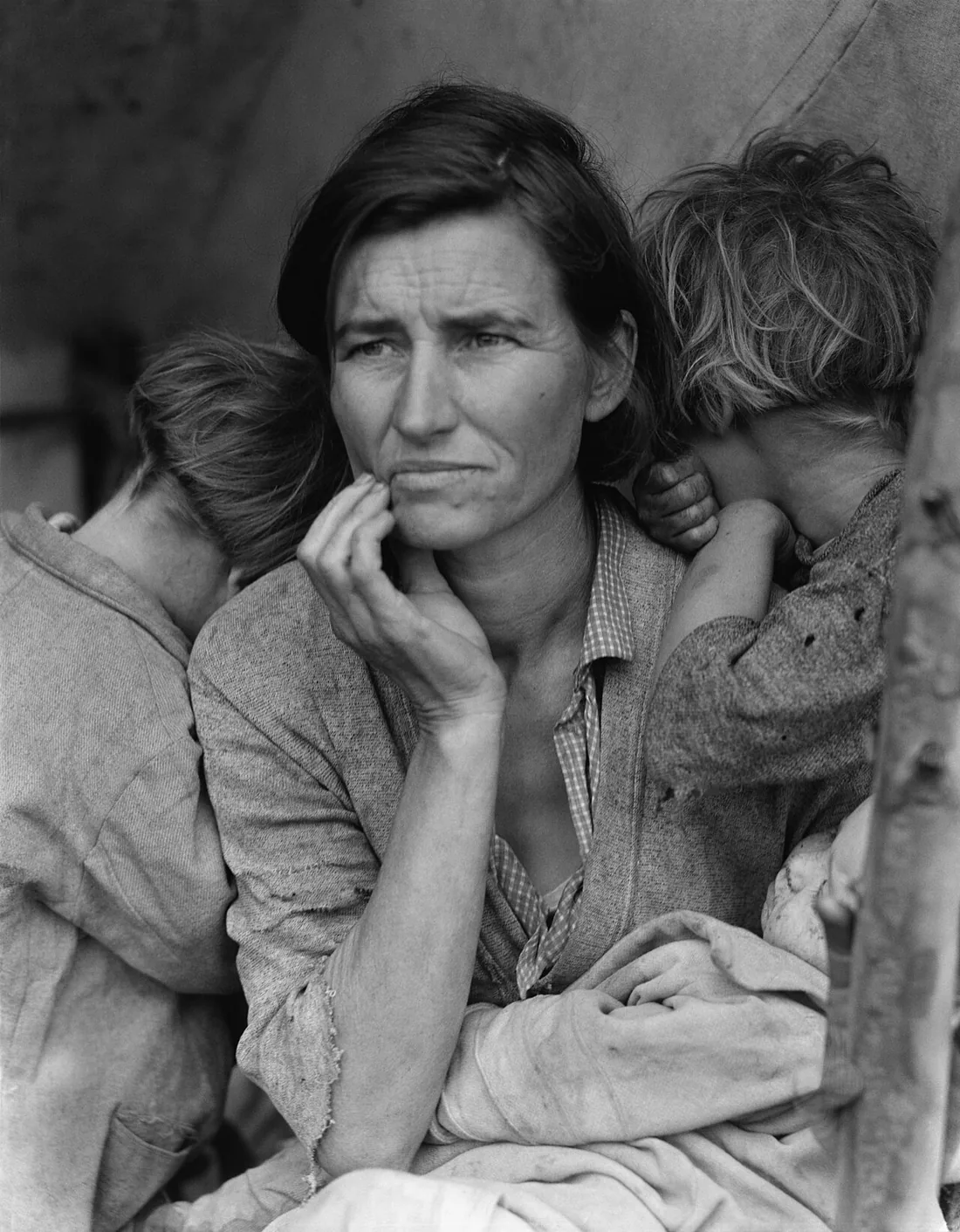
Dorothea Lange, Migrant Mother, 1936. Library of Congress. Public domain, via Wikimedia Commons.
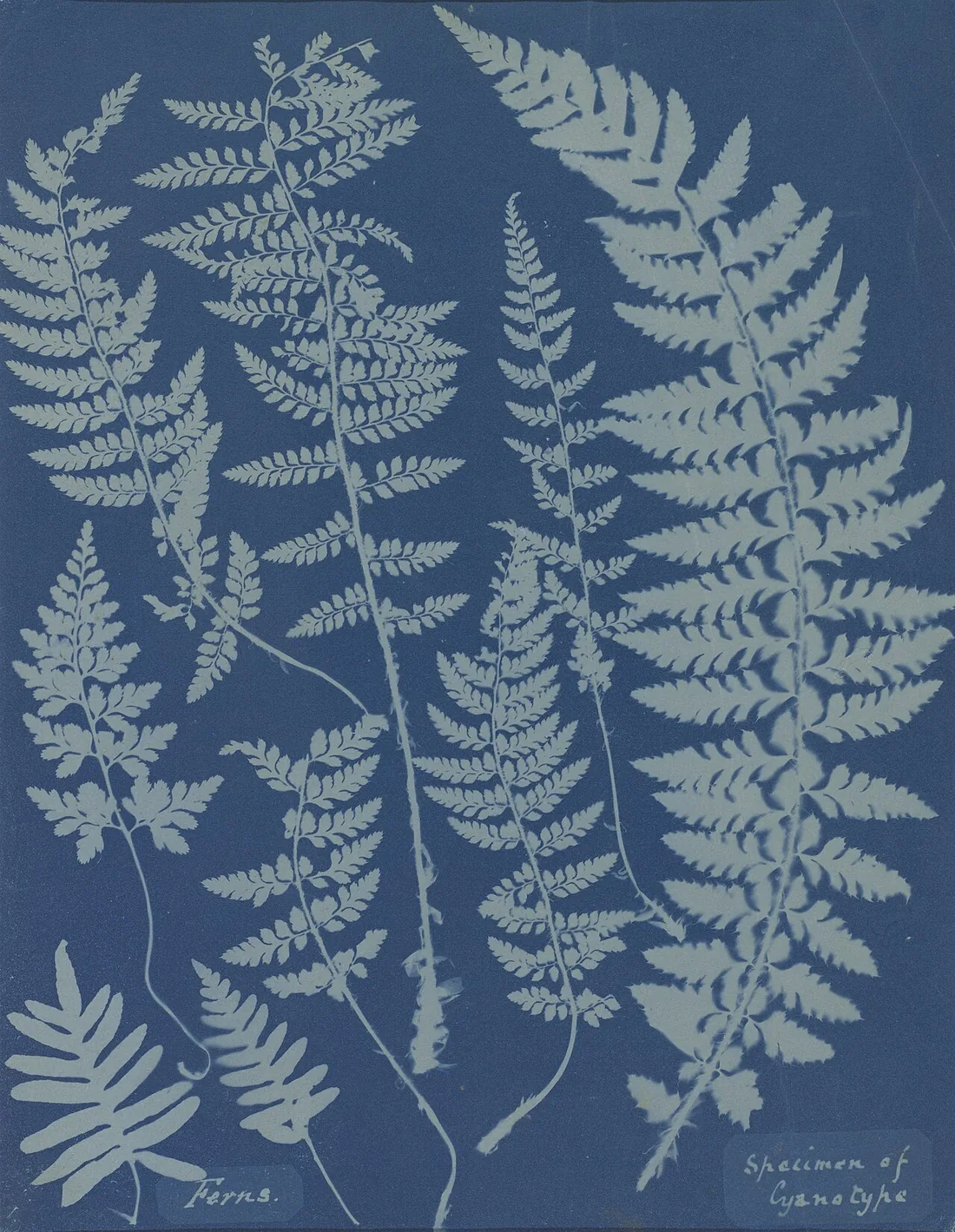
Anna Atkins, Ferns. Specimen of Cyanotype, 1840s. National Gallery of Art, Washington. Public domain, via Wikimedia Commons.
Fine art and contemporary photographers
Fine art photography is made as an artwork in its own right, for a gallery wall or a book, with no news story or client behind it. The Pictorialists made that case from the 1880s, and it is the subject of Light and Magic at Tate Modern. Alfred Stieglitz (1864–1946) took the argument to New York, founding the Photo-Secession in 1902, and his The Steerage, below, is one of the pictures that settled it.
- Andreas Gursky (born 1955), Thomas Struth (born 1954) and Thomas Ruff (born 1958) all studied under Bernd Becher in Düsseldorf and helped take photography to the scale of painting.
- William Eggleston (born 1939) made colour serious, with his show at the Museum of Modern Art in New York in 1976.
- Jeff Wall (born 1946) stages photographs the way a painter or film director makes pictures, and shows many as lit transparencies.
- Wolfgang Tillmans (born 1968) was the first photographer to win the Turner Prize, in 2000.
- Zanele Muholi (born 1972) is a visual activist and the portraitist of Black queer and trans South Africa.
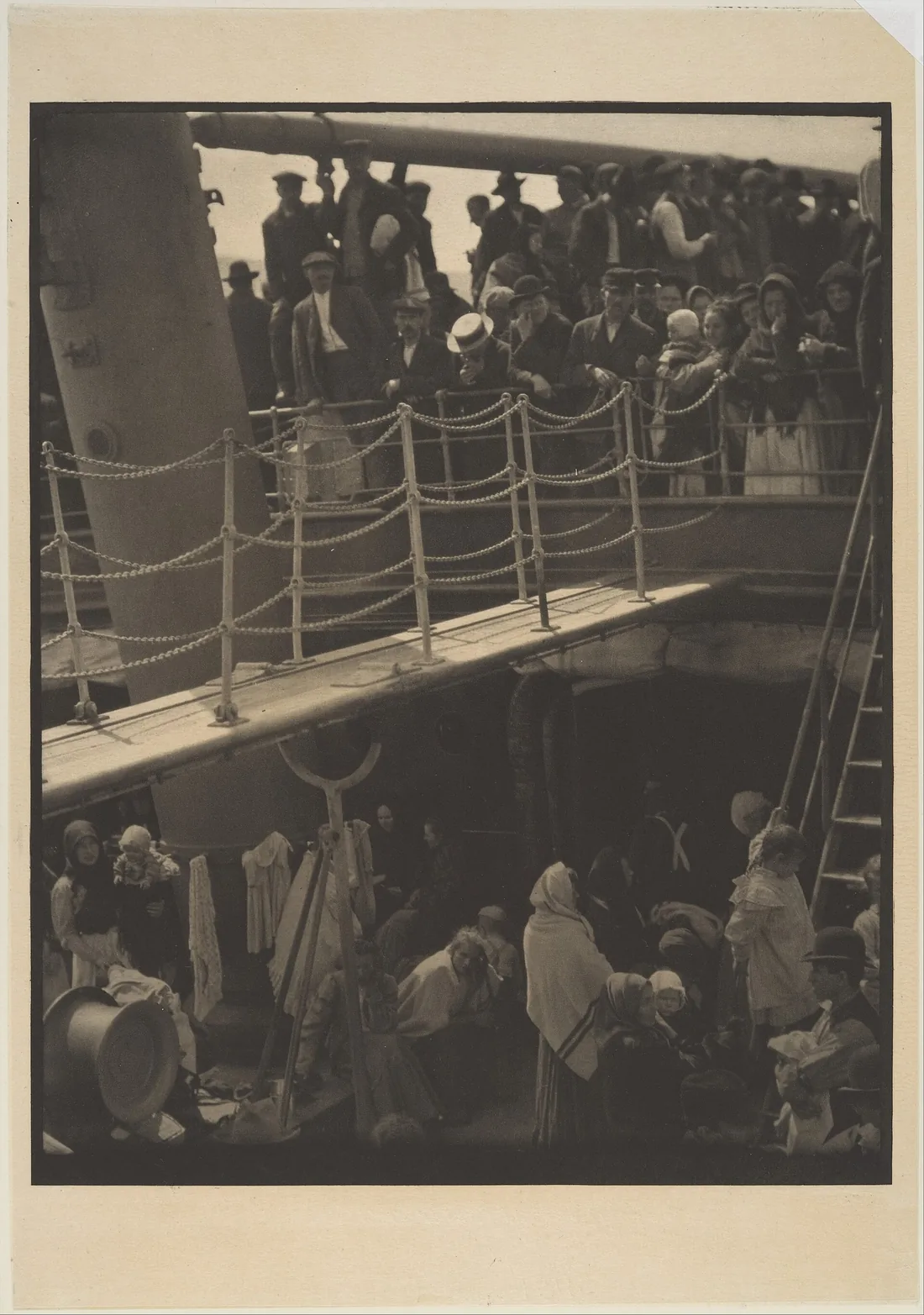
Alfred Stieglitz, The Steerage, 1907, printed 1915. The Metropolitan Museum of Art, New York. Public domain, via Wikimedia Commons.
Photography exhibitions in London this winter
| Exhibition | Where | Until (2027) |
|---|---|---|
| Winston Taylor Photo Portrait Prize 2026, known until last year as the Taylor Wessing | National Portrait Gallery, from 5 November | 17 January |
| Tim Walker's Fairyland: Love and Legends | National Portrait Gallery | 7 February |
| Light and Magic: The Birth of Art Photography | Tate Modern | 21 February |
| William Eggleston: All that goes unnoticed | The Photographers' Gallery | 21 February |
| Sanlé Sory: Colour Years | The Photographers' Gallery | 21 February |
| Nan Goldin: You Never Did Anything Wrong | Hayward Gallery, from 24 November | 14 March |
| Wildlife Photographer of the Year | Natural History Museum | 11 July |
We checked these dates at the start of November, but check with the venue before you travel.
Light and Magic is the one to plan around. Tate calls it the first major exhibition to explore Pictorialism as a global movement, with over 200 prints by over 80 artists, from Stieglitz, Edward Steichen and Gertrude Käsebier to Fan Ho. Tickets are £20. Our guide to London art exhibitions this winter has the rest of the season, and if you can get to France, Paris Photo is at the Grand Palais from 12 to 15 November.
The most expensive photographs ever sold
| Photograph | Price | Sale |
|---|---|---|
| Man Ray, Le Violon d'Ingres, 1924 | $12.4 million | Christie's, New York, May 2022 |
| Edward Steichen, The Flatiron, 1904 | $11.8 million | Christie's, New York, November 2022 |
| Andreas Gursky, Rhein II, 1999 | $4.3 million | Christie's, New York, November 2011 |
| Cindy Sherman, Untitled #96, 1981 | $3.9 million | Christie's, New York, May 2011 |
Prices include fees. Rhein II held the record until Man Ray's print nearly tripled it, and we found no higher auction price for a photograph up to November 2026. These are the exceptions, and our report on the photography market in 2026 covers where most prints sell.
If you own a photograph
Start with when the print was made. A vintage print was made at or near the date of the negative, and a later print comes from the same negative afterwards, sometimes decades afterwards. Two pictures in this post show the difference: The Steerage was taken in 1907 and that print dates from 1915, and the Atget negative of 1898–99 was printed in 1956. At Photo London this year, a vintage print by Jane Evelyn Atwood sold for £13,000 and a modern print of the same picture for £2,000.
Then look at the process. A gelatin silver print is the standard black and white photograph of the 20th century, made on paper coated with silver salts in gelatin. Platinum, C-type, dye transfer and pigment prints are each dated and valued differently.
Then turn it over. The back is usually where you will find the signature, the photographer's or estate's stamp, the edition number and the date. Pictures cut from books and posters are reproductions, however good they look.
Our guide to photograph valuation sets out what we need to identify a print. If you would like to know what you have, send us photographs for a free valuation. There is no obligation to sell, and we act for you rather than for the saleroom.
Cover: Nadar, Sarah Bernhardt, about 1864. The Getty, Los Angeles. Public domain, via Wikimedia Commons.
Photography · Exhibitions